
Fall greetings!
What an adventure of a summer I was lucky to have! I traveled to hang with family and friends, journeyed to London for an incredible experience studying theatre – and I even took a course through UC Berkeley to study Homer’s The Odyssey ahead of being dazzled by the film!
So, yup! This summer was definitely epic!
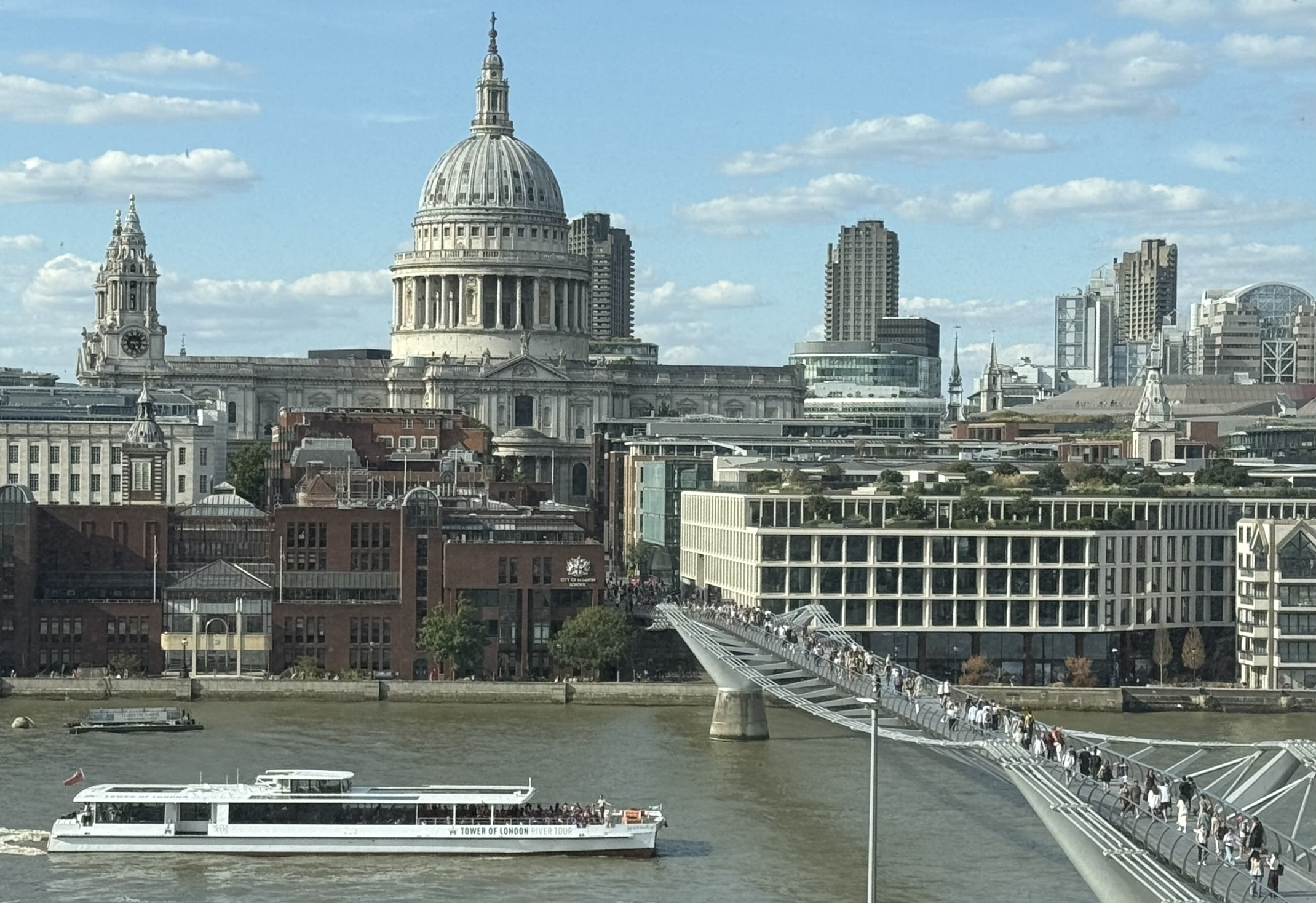
Spending time in London was a highlight for sure! I got to take in all kinds of plays while also making time to visit (and revisit) amazing museums and historic sites! Like St. Paul’s Cathedral where I lit candles for loved ones:
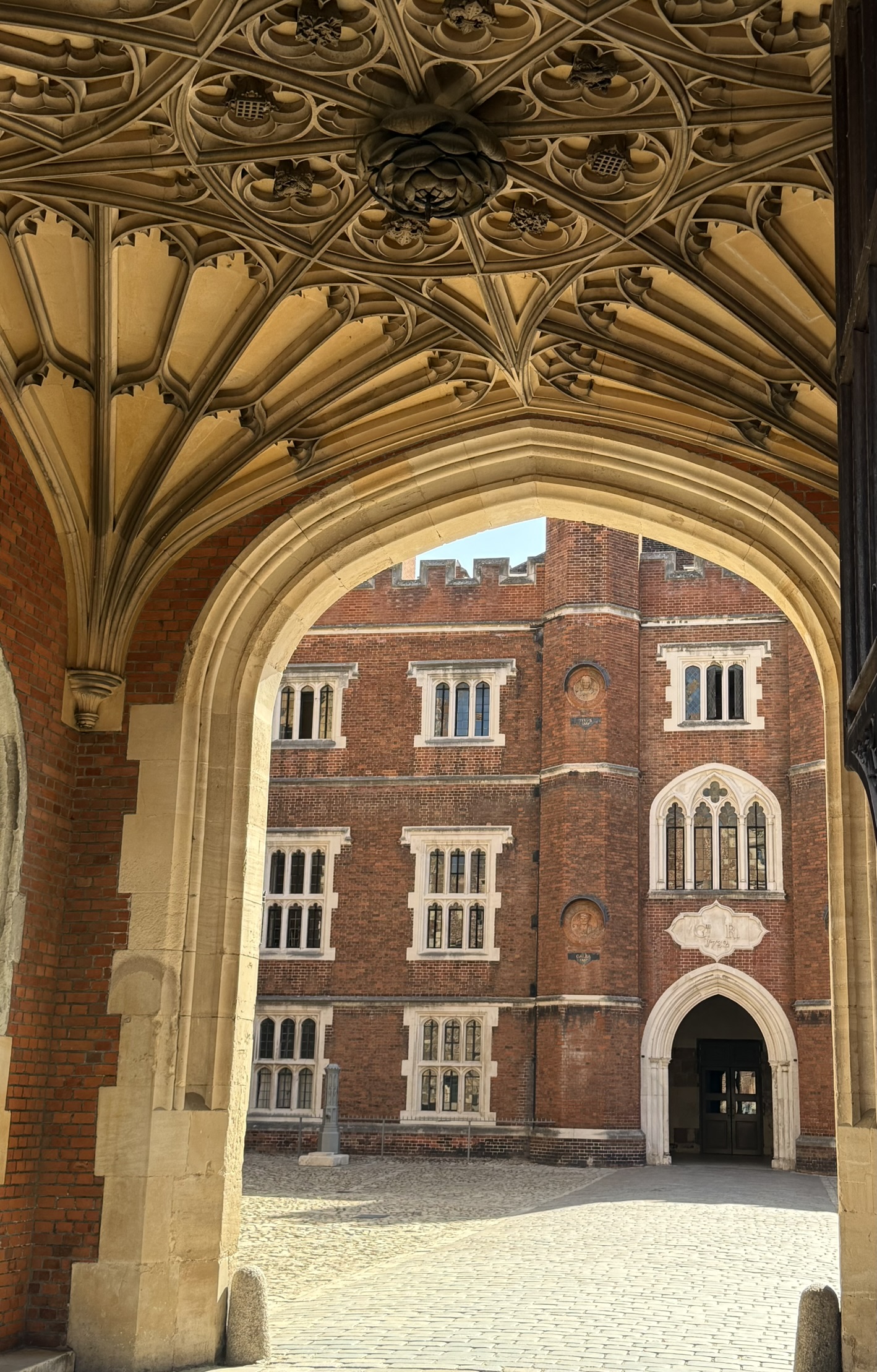
And the sprawlingly beautiful and brick-y Hampton Court Palace in nearby Surrey, where I hummed tunes from the musical “Six” to myself the entire time:
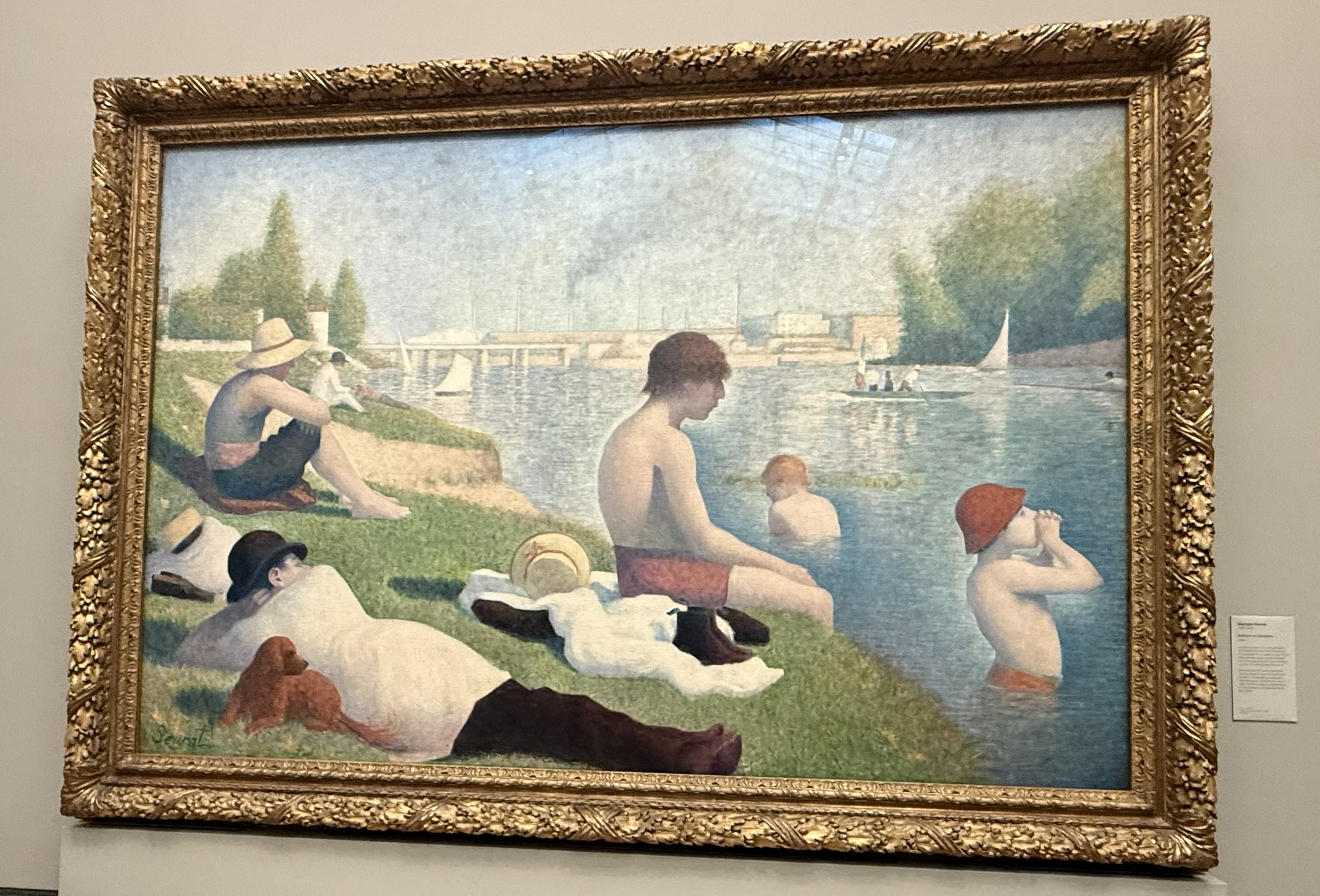
Because so many of London’s wonderful museums are free, I adored popping into them even with only a little time to browse! Like I hit the National Gallery, London, where I got to study the art of familiar names like Georges Seurat and his “Bathers at Asniéres” (which, with more time, I’d have learned to pronounce…), and Akseli Gallen-Kallela, whose work I was so pleased to see displayed outside his native Finland!
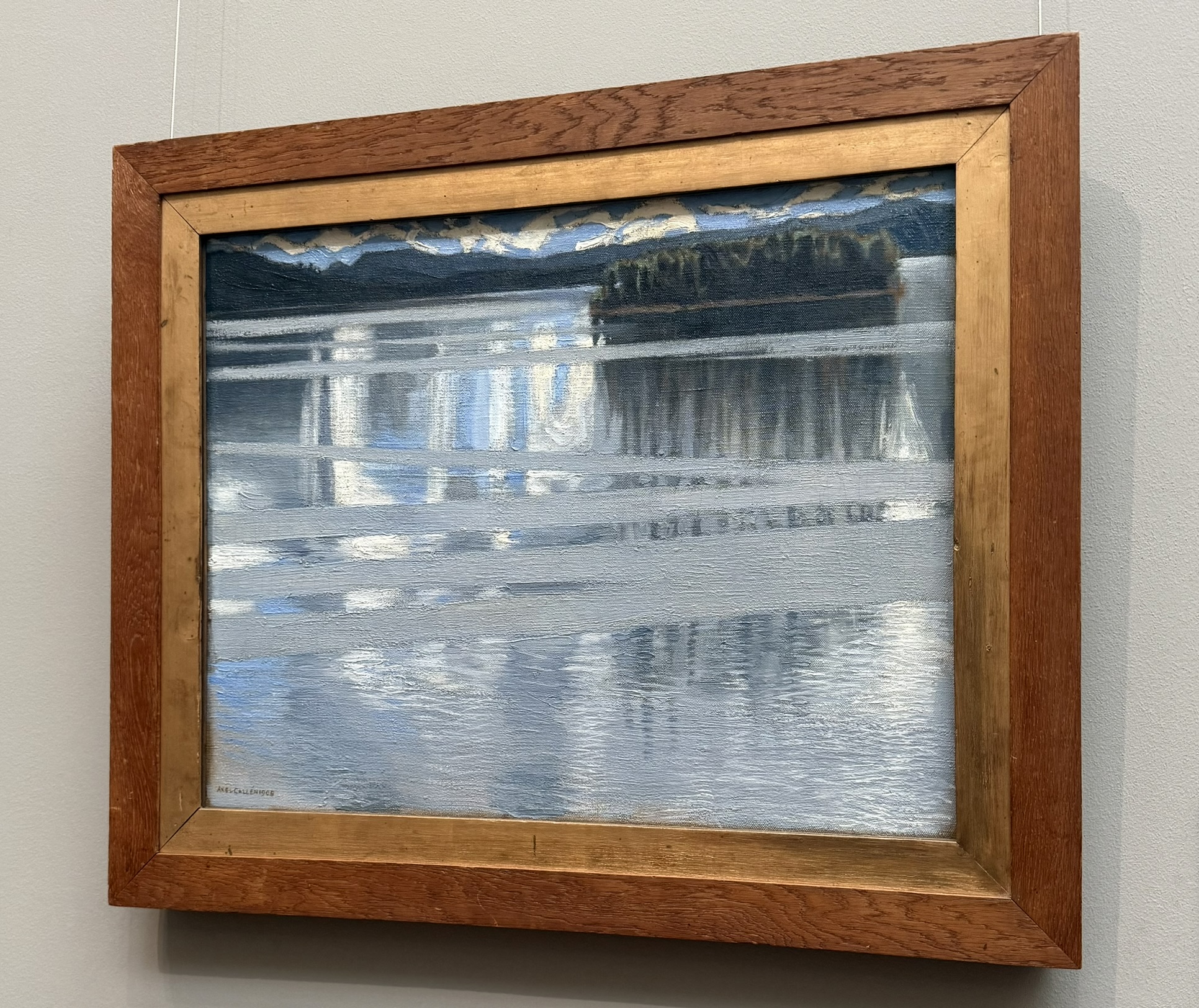
Of course, we don’t know the artist behind every single painting or ancient art piece. Some credits have simply been lost over time. Having grown up going to museums, I’ve long been used to both keeping my hands clasped behind me to show I wasn’t touching anything, and to seeing certain items attributed to “Unknown”. But my London ramblings reminded me of the introduction I got last summer to an alternative designation –
That of the “Once Known”.
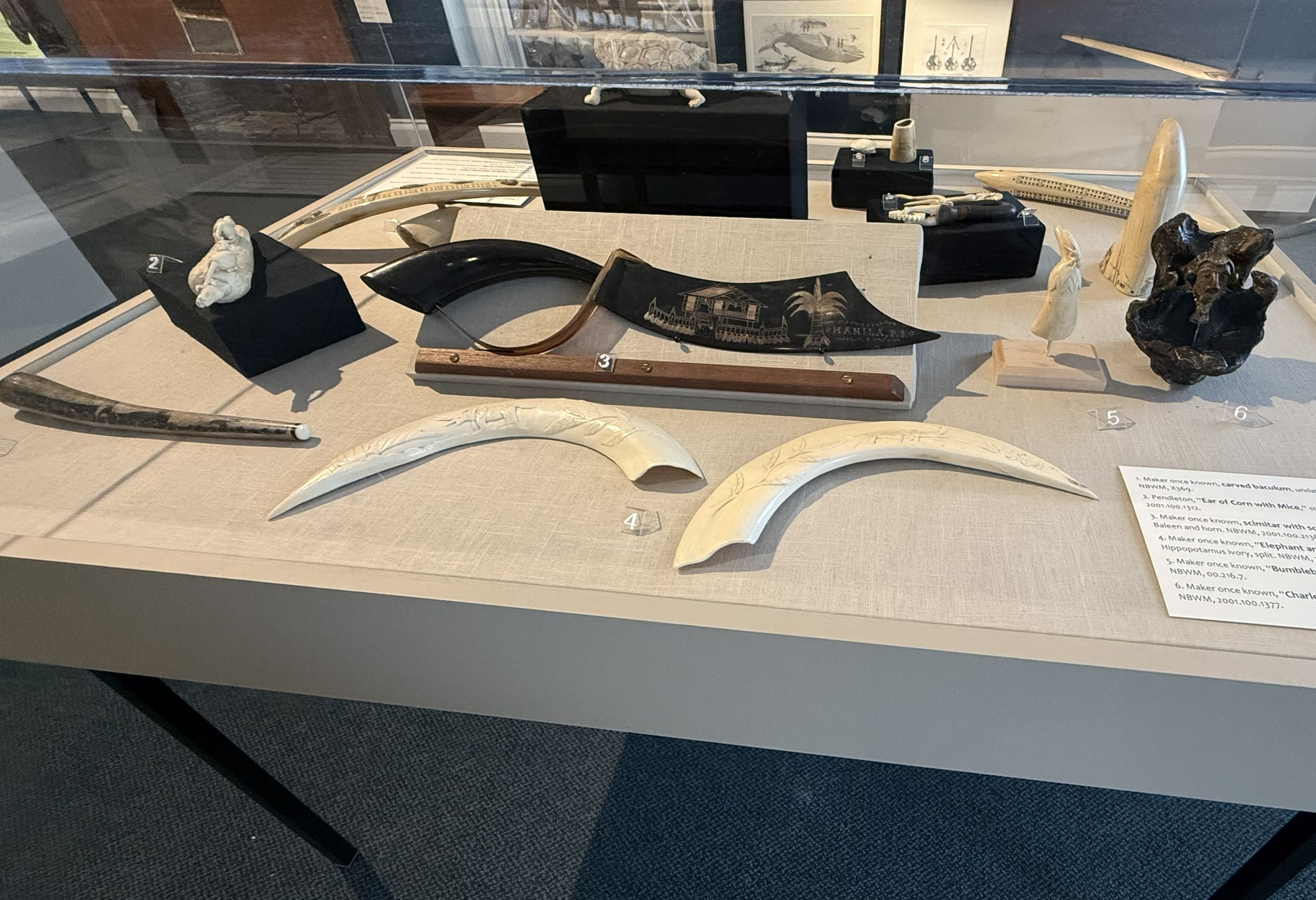
I was touring with my friend Jen who lives outside Boston, and one of our Massachusetts stops was at the New Bedford Whaling Museum! Being a fan of things ocean-y, I very much enjoyed its exhibits, including on the history of Old Dartmouth up to the 1820’s when its whaling industry rose to prominence. New Bedford’s nickname, “The City that Lit the World”, comes from its having provided lamp oil from whale blubber to much of the globe back then.
According to its website, this museum houses the largest collection of scrimshaw in the world! These are objects carved by whalers out of marine mammal byproducts like teeth and bone. In the case pictured up top, items were described using the words “Maker once known”:
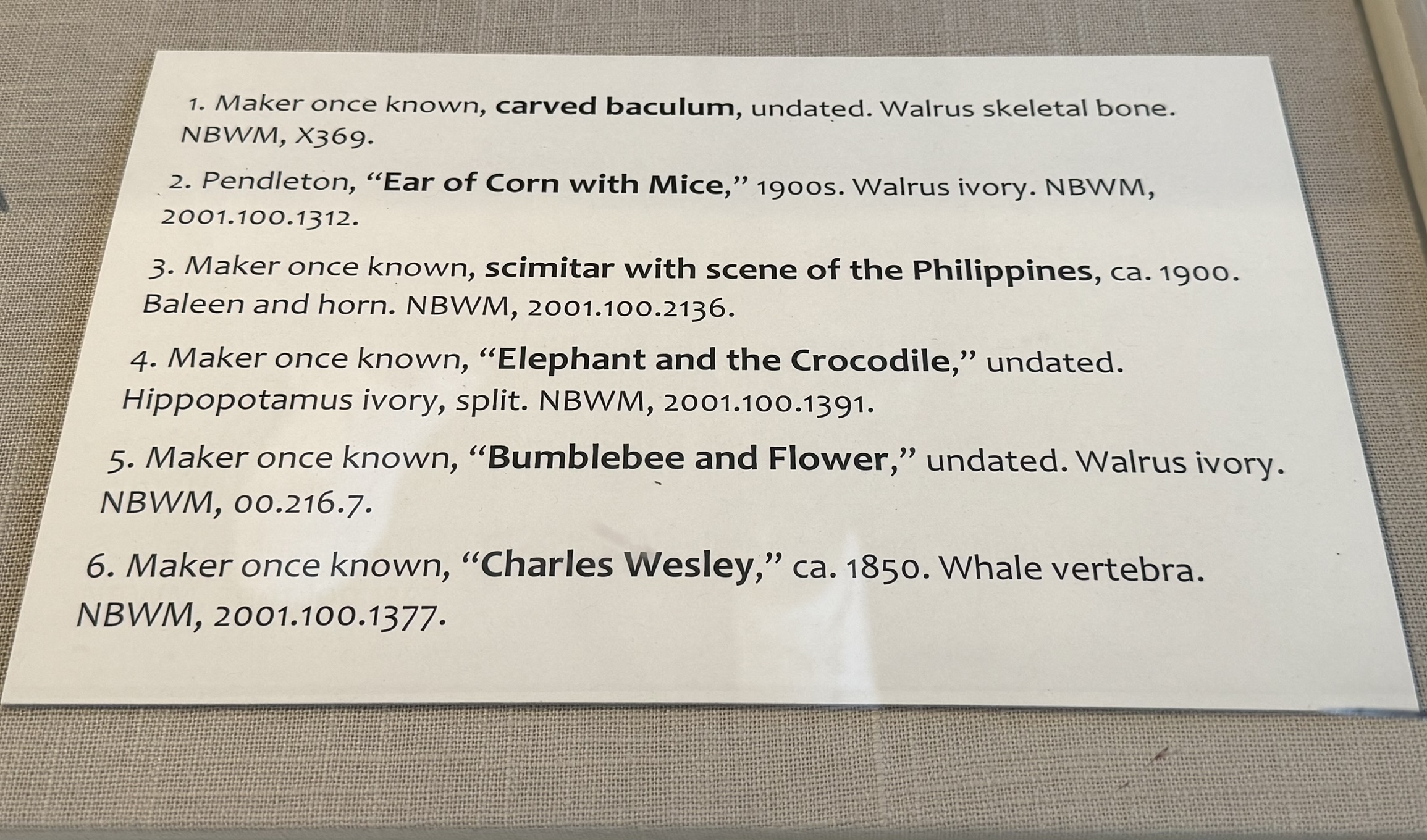
I think I giggled a little at first over this semantic choice. I mean, I’d had no problem with the word “unknown” – it didn’t ever confuse me. (Even though I did once think the TV Guide listing “To Be Announced” was for a series that ran at super-random times…) Eventually though, this simple change grew on me. It gave me a greater sense of connection to contributors to history who don’t always get a lot of press.
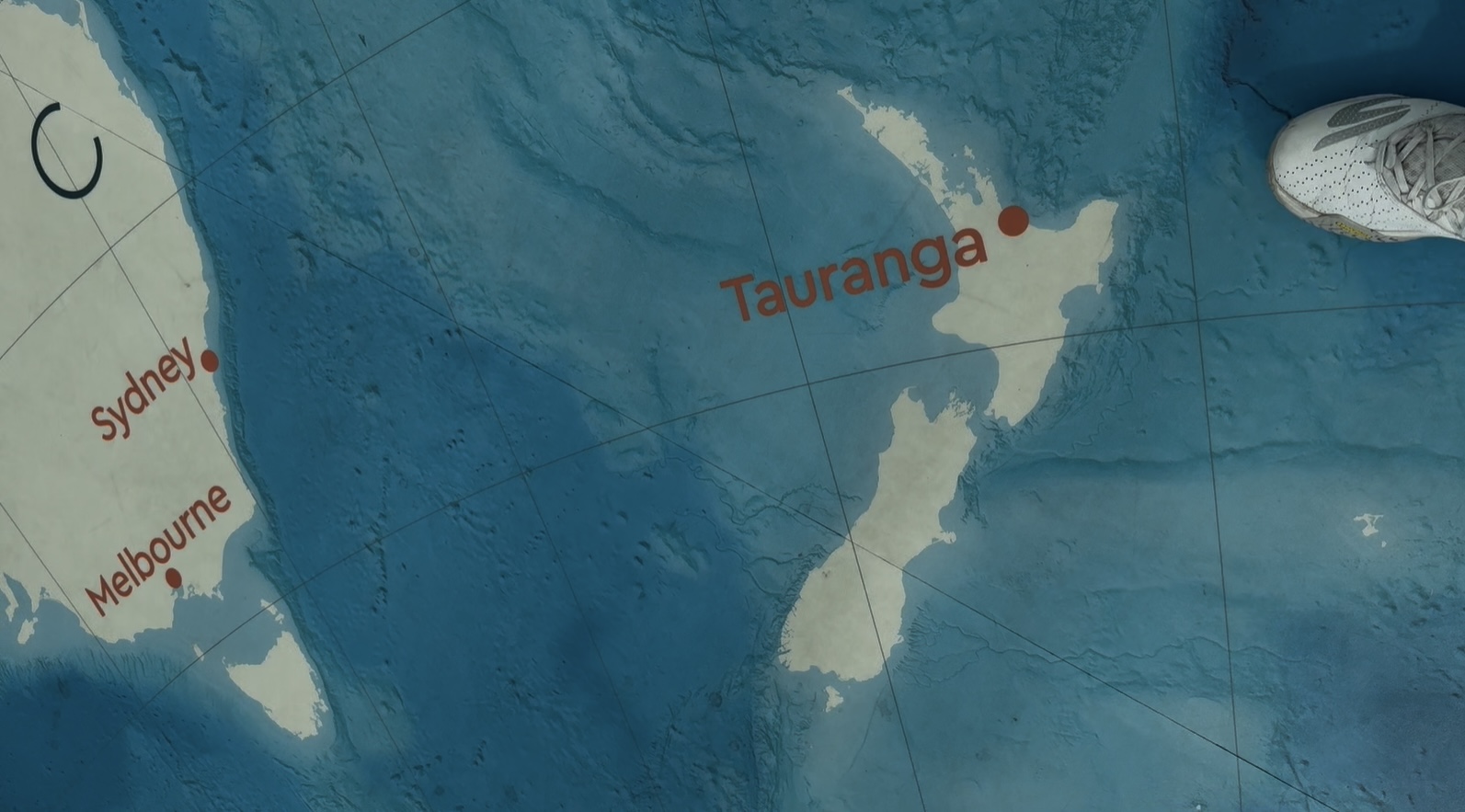
Okay, so I’m serious about my fascination with sea-related stuff! In London, I took a boat ride down the Thames to Greenwich where I mainly wanted to navigate toward the fantastic National Maritime Museum! It’s got several huge floors covering life on the ocean and within it. And it was sweet to touch base with familiar explorers like Ernest Shackleton (who I first learned about there years ago) and Mum’s personal favorite, James Cook! Plus on a huge map of the world seas that you can walk all over, I was delighted to trace my family’s 1968 voyage from the US to Australia on the SS Canberra – another epic journey!
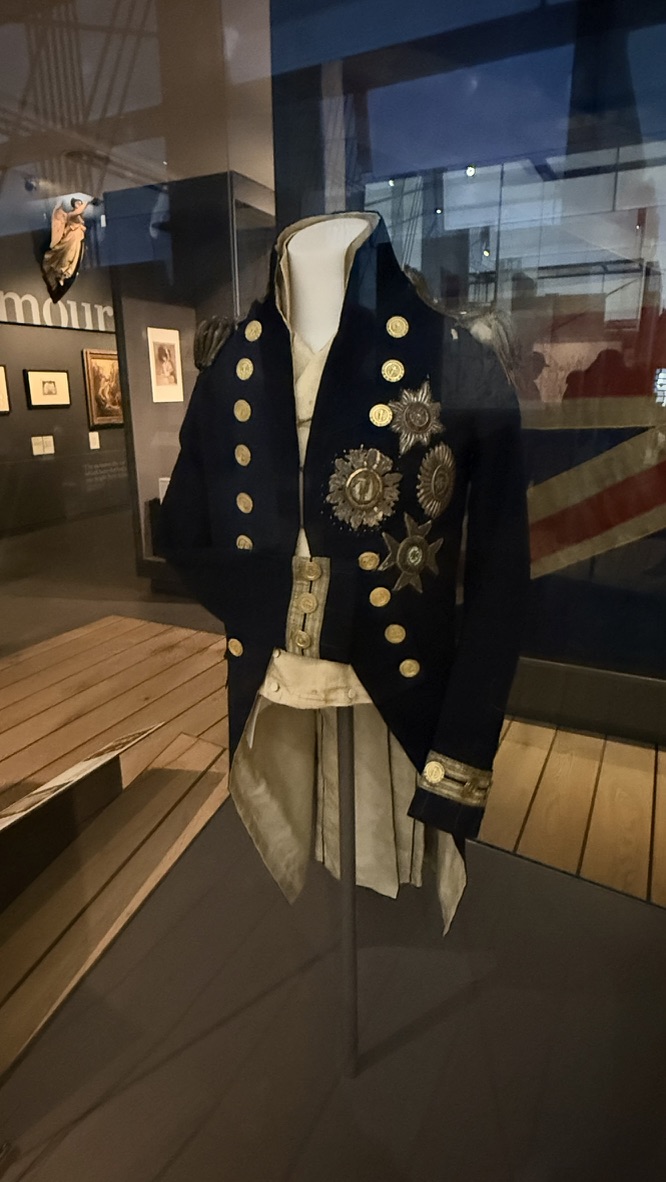
I don’t imagine any British maritime museum would be considered complete without a tip of the bicorn to the Royal Navy’s legendary Admiral Lord Nelson! Among other triumphant engagements, Horatio (as I would not have presumed to call him if we’d met) applied his strategic “Nelson Touch” at the Battle of Trafalgar in 1805, and the resulting British victory scuttled Napoleon Bonaparte’s invasion plans. Sadly, Nelson was fatally wounded – and the uniform he died in is on display:
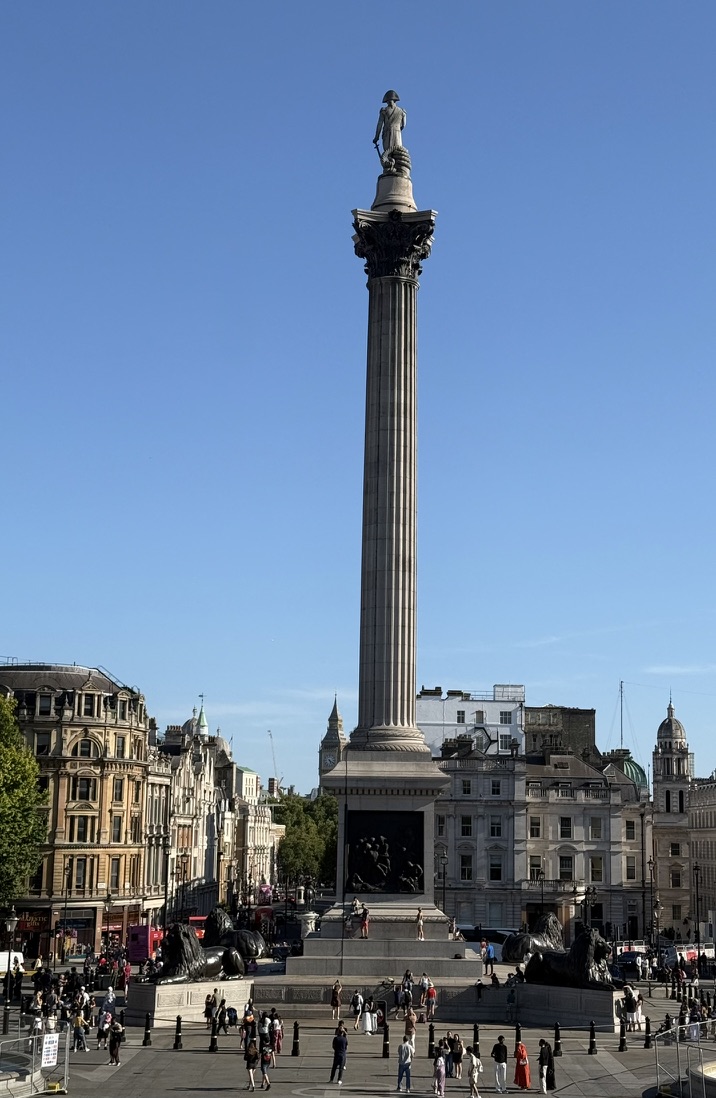
Back in the heart of London, it’s difficult to miss the Nelson Column that pays tribute to the man and his accomplishments. Yes, it’s imposing, but it feels appropriate – he did all the things, after all! Some people aim at such kudos when they didn’t do all the things…
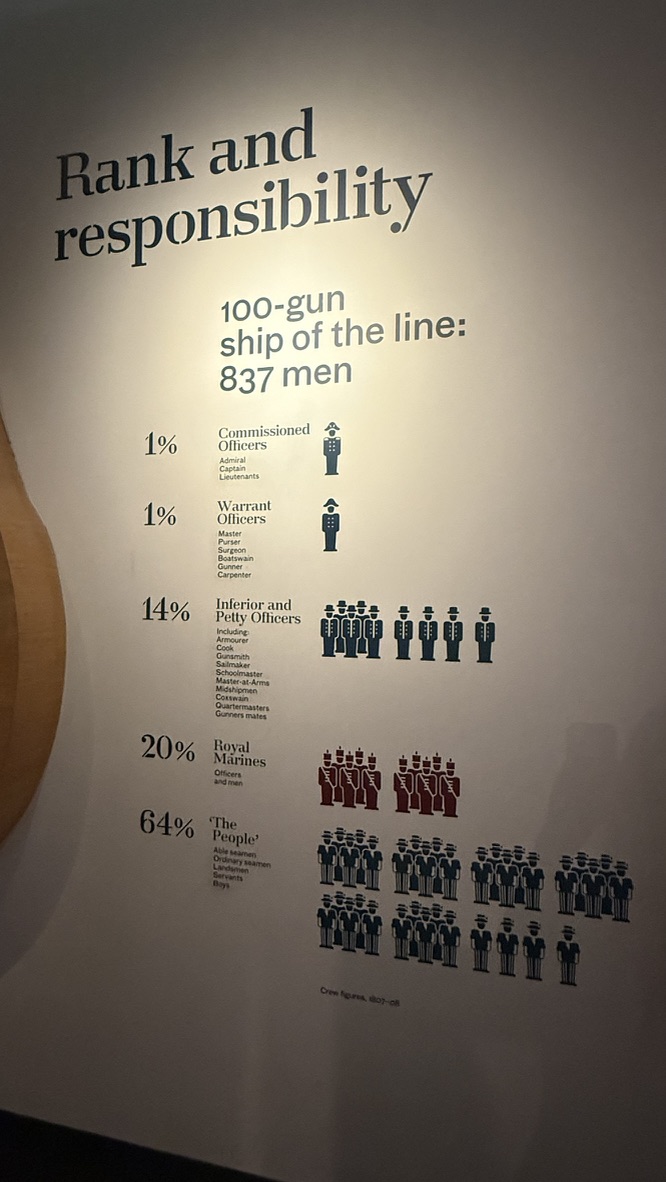
But I was also fascinated at the museum by a chart with a breakdown of the crew on ships like Nelson’s:
Per the website of the Old Royal Naval College (the Maritime Museum’s neighbor in Greenwich), Nelson was among some 450 British men who lost their lives in the Battle of Trafalgar. I was glad to learn that the names of the sailors who performed as England expected on that day were known and preserved – and I appreciated the reminder to give some thought to them.
Now, I do recognize that the idea of acknowledging the nameless who made some martial, societal or artistic contribution isn’t at all new. And especially as we get closer to Veteran’s Day in the US, and Remembrance Day abroad, I’m happy to see these folks honored under any designation!
It’s just to my mind, referring to someone as “once known” rather than “unknown” now feels like what Mark Twain would have judged as the difference between “lightning” and a “lightning bug”. “Unknown” does get the job done – but on that day in New Bedford, the lives of those “once known” whalers who carved mementos in the midst of their harsh and even deadly work became more focused for me. I envisioned them as people someone knew and cared for. It felt less clinical. More poetic.
So while I initially dismissed the “once known” term, I prefer it now – and when I catch it in a museum, I embrace it.
You know, figuratively – I still keep my hands behind me!
Annnd…since I’ve been so immersed this summer in all things Shakespearean and Homeric, please forgive my taking a run at expressing the above thoughts in an earnest, but slightly sillier and definitely more pretentious manner:
ODE TO THE ONCE KNOWN
In me a great affection now hath grown,
For hailing those, the nameless, as “Once Known”.
Fierce battles they helped win, and trails blazed;
Great walls they built far skyward, others razed.
O’er oceans seeking whale-fish did they roam,
Whilst others, bathed in lamplight, stayed at home.
Yay, heroes perch on columns high and lofty,
While others’ feats are heralded more softly.
In bygone hearts, these once-known souls hath dwelt;
Perhaps their loss by kinsmen keenly felt.
But while fate leaves some monikers unsure,
The work of those once known can yet endure.
For though one might crave tribute and acclaim,
One’s deeds may echo louder than a name.
As Bacon said of truths and verities,
They are time’s daughter, not authority’s.
To those once known, I offer up this rime;
‘Tis but your name – not you – that’s slipped from time.
Where relics small reside or poppies blow,
We see, we sense, we cherish. And we know.
Cheers-eth to thee! Or yeah…maybe just cheers!


16 plays in London?wow. Interesting take on once known/unknown
Thank you! It surprised me how much that “once known” phrase stuck with me – just had to share. And yes, that was a marathon of plays but it was a real delight!
Kia ora And you nearly stood on Aotearoa New Zealand!
Ha! I did try to be respectful and not tread on any islands. 😃 I think we docked in Auckland back in the day – would love to get back to that part of the world now that I’m older than four!
That was an epic summer. 16 plays!!!! That’s awesome 👏🏾
Yes, a dirty job, but it just had to be done! 😉