
Happy Official Autumn!
So every time I aim to close out the year strongly by focussing on professional matters, my thoughts drift off to the lazy days of summer (the active ones, too!) when I got to indulge in some of my very favorite pastimes…
For one, I fed my love of history! I got to take trips up and down both US coasts, visiting family and friends, and hitting historic places from my travel bucket list! And in the “lazy day” column, I caught up on archaeology magazines and binge-devoured old episodes of the British series Time Team like candy!
Although my major was English, the very first college course I attended was called Classic Archaeology – and it’s been an interest ever since! Even so, my command of the discipline’s jargon constantly needs updating. Like I’m glad they explained on Time Team that “geo phiz” wasn’t a mixed drink but a nickname for their Geophysical Survey Equipment. And the first time I heard the phrase in situ, I thought someone was trying to sneeze politely…
But in archaeological terms, in situ is when an artifact is in the original place and position where it was discovered, providing a better sense of the context in which it was used and its overall place in time.
During my summer travels, I checked out some older items that definitely weren’t in situ anymore. And I don’t mean coins or pottery – I’m talking big ticket stuff!

I can’t help mentioning how my college professor almost sounded regretful about the technological tools available in modern archaeology. He seemed to have held onto the romantic idea that if one found an ancient golden goblet in situ, it should be dug up straight away and brushed off with a sleeve, then filled with wine and passed amongst the crew for a sip – and then the analysis would begin! Back in more freewheeling dig days, whole structures (let alone goblets) might be spirited away from their in situ sites by an ardent archaeologist (or by a rich dude, as I recount in The Bit About Transplanted Treasures).
I did read about and see first-hand this summer though that buildings have also been moved more in the interest of preservation:
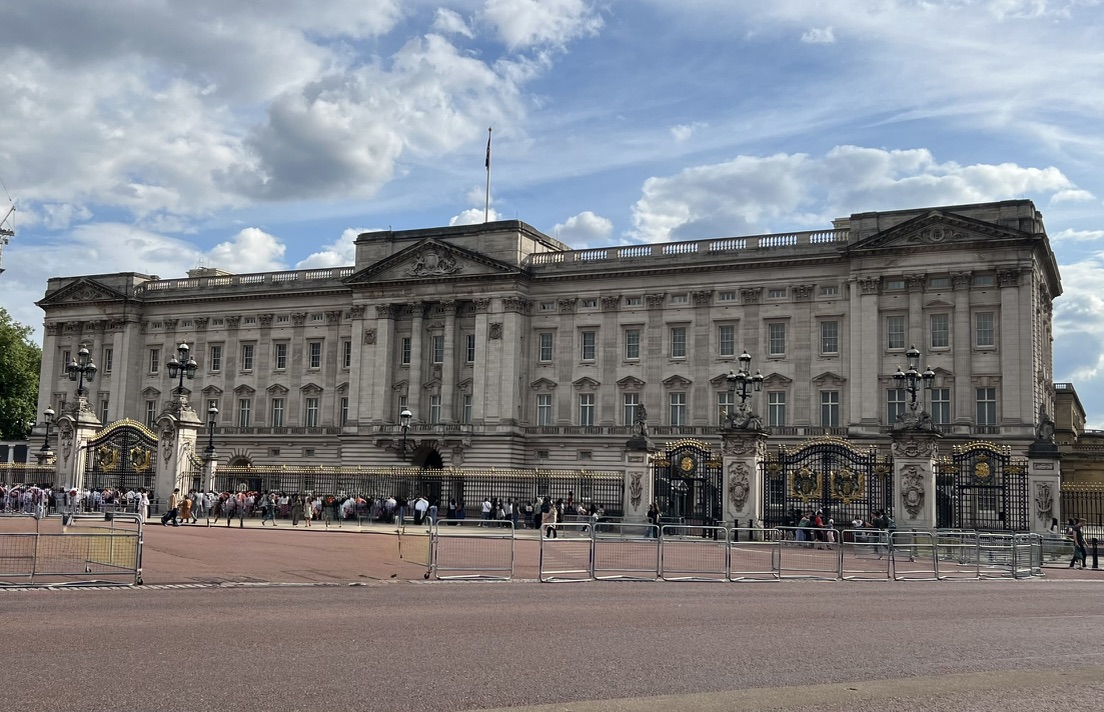
North Carolina’s Cape Hatteras Lighthouse was picked up and shifted inland since the workings of nature were eroding an ever-nearing shoreline. And when the course of nature blessed England’s Queen Victoria and Prince Albert with nine children, it was decided that London’s wee Buckingham Palace simply wouldn’t do as it was. So the huge Marble Arch that stood right outside was moved to a corner of Hyde Park, making way for an additional wing.
When the River Nile’s course was altered with the construction of Egypt’s Aswan High Dam, ancient monuments were relocated to avoid their being submerged. And Founding Father Alexander Hamilton’s home has been moved not once but twice – first, to protect it from demolition, then to make it more accessible to history buffs (and now Broadway musical fans!) at Hamilton Grange National Memorial in Manhattan.
Of these varied items that are no longer in situ, I’ve only seen the Marble Arch. But I hope to catch more as I try to work my way through UNESCO’s list of World Heritage sites:

According to the book, that relocation of monuments due to the Aswan High Dam was UNESCO’s first spearheading of a campaign to rescue imperiled cultural treasures – and it “paved the way for the key notion of the common heritage of mankind”. Such drastic measures aren’t required in every case, but now a treaty called the World Heritage Convention can be invoked to identify and preserve sites of cultural and natural significance throughout the world!
Honestly, I’d be quite happy to travel to London to see more results of these mammoth moves – but turns out there are examples just a few miles from home! And not too much farther away, a bit of London has kind of traveled to me!
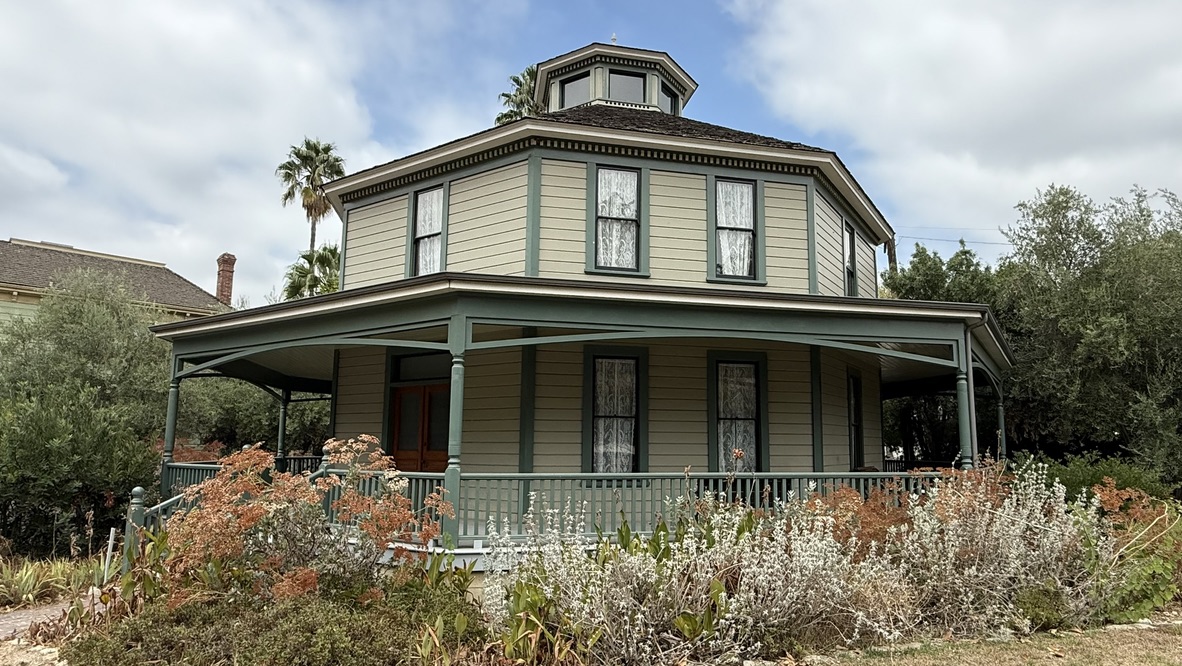
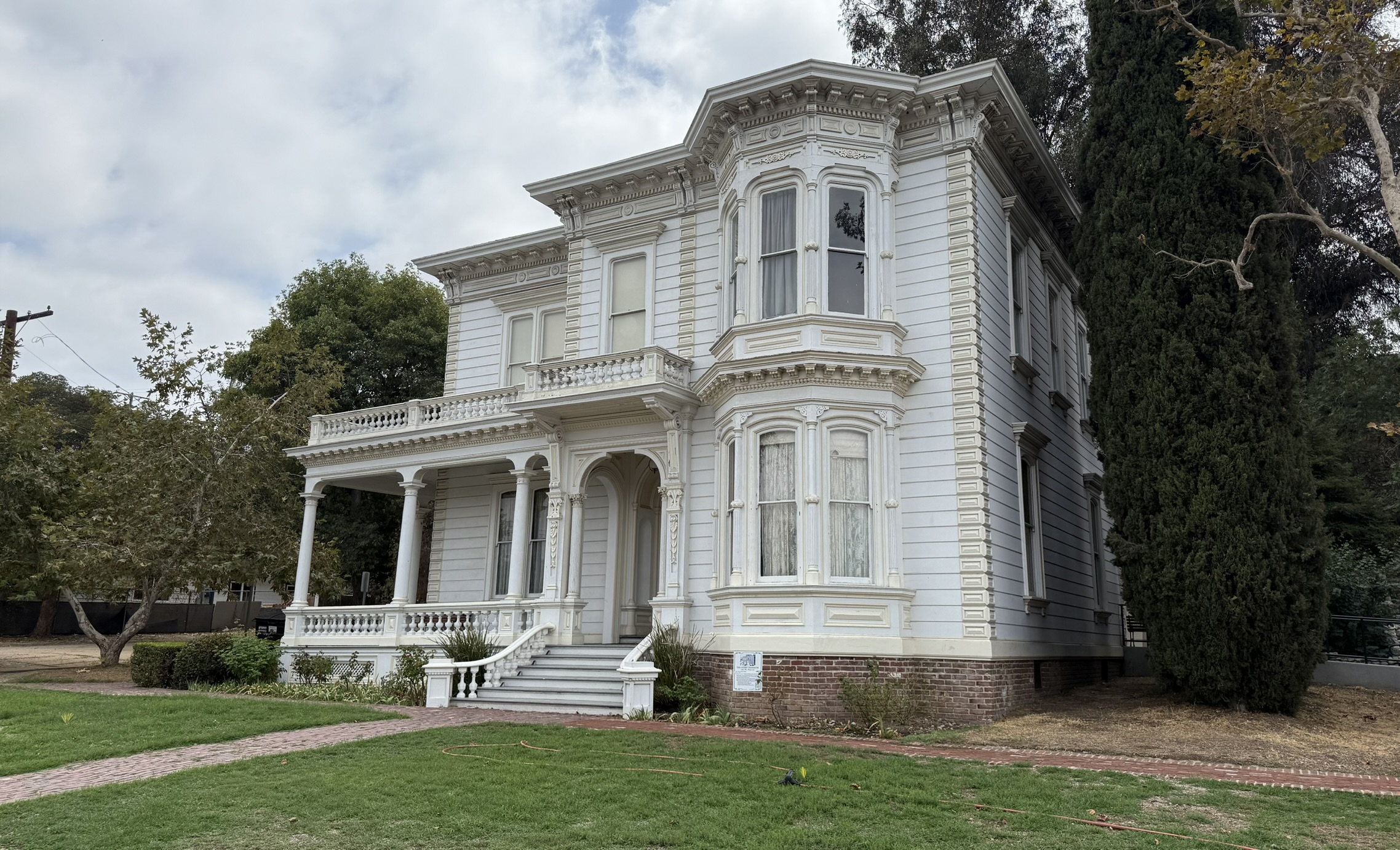
Here in Los Angeles, there’s a charming collection of historic homes just north of Downtown at the Heritage Square Museum! The museum’s mission is “to Preserve, Collect, and Interpret the architecture, physical environment, and culture of Southern California during the first one hundred years of statehood” – and to that end, buildings from the LA area that faced demolition have been moved, restored and furnished to create a quaint city block from days gone by!
Among them is the Octagon House, built in 1893 in Pasadena:
There’s the Perry Mansion, built in 1876 and moved from Boyle Heights:
And the Hale House, built in 1887 in Highland Park:
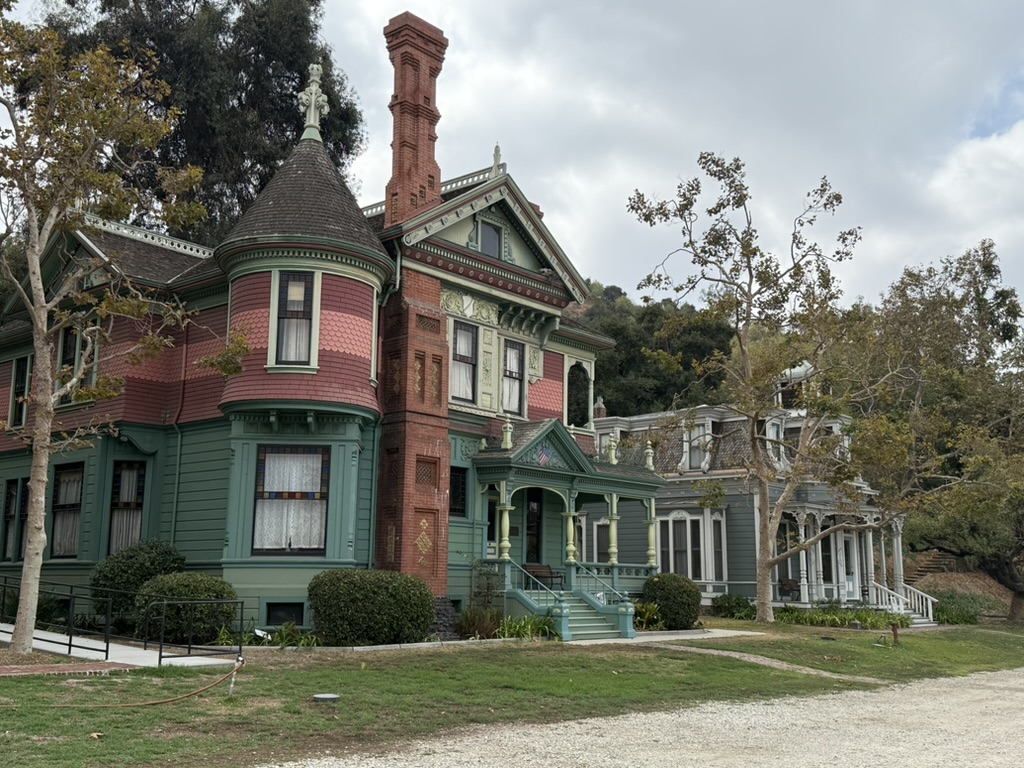

The museum also offers the Great Hiking Era Interpretive Trail for folks interested in experiencing local wilderness just as LA residents from over a century ago would have done!
And I’ve known for years that just a short but desolate drive away lies another transplanted piece of history – the London Bridge!
Well – a London Bridge.

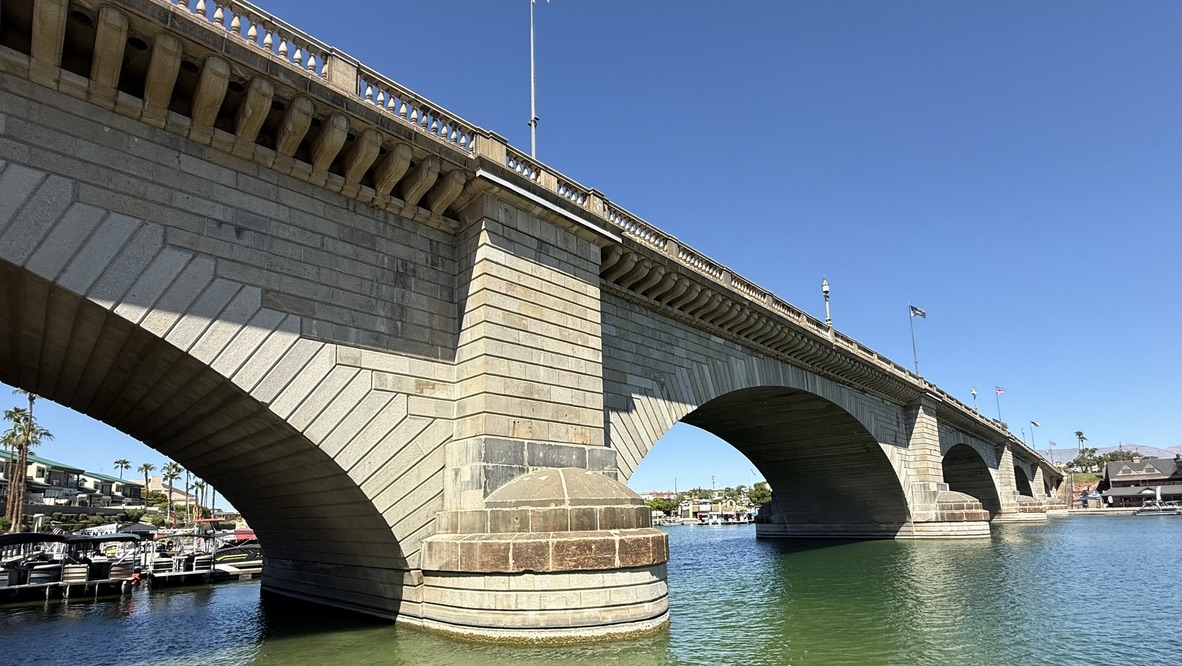
Beginning with wooden versions dating to before Roman times, a number of London Bridges have spanned the River Thames – including a 12th Century stone one that lasted more than 600 years! When the 1831 iteration needed replacing, it was put up for sale and purchased in 1968 by an American, Robert B. McCulloch, Sr., for just under $2.5 million. The bridge became part of his vision to make Arizona’s Lake Havasu City a prime tourist destination!
The town had been established just a few years before beside a reservoir along the Colorado River. Mr. McCulloch arranged for each London Bridge stone to be numbered before disassembly and shipment stateside. After an inner support structure was built, the bridge was reconstructed across Lake Havasu’s Bridgewater Channel and rededicated in 1971!

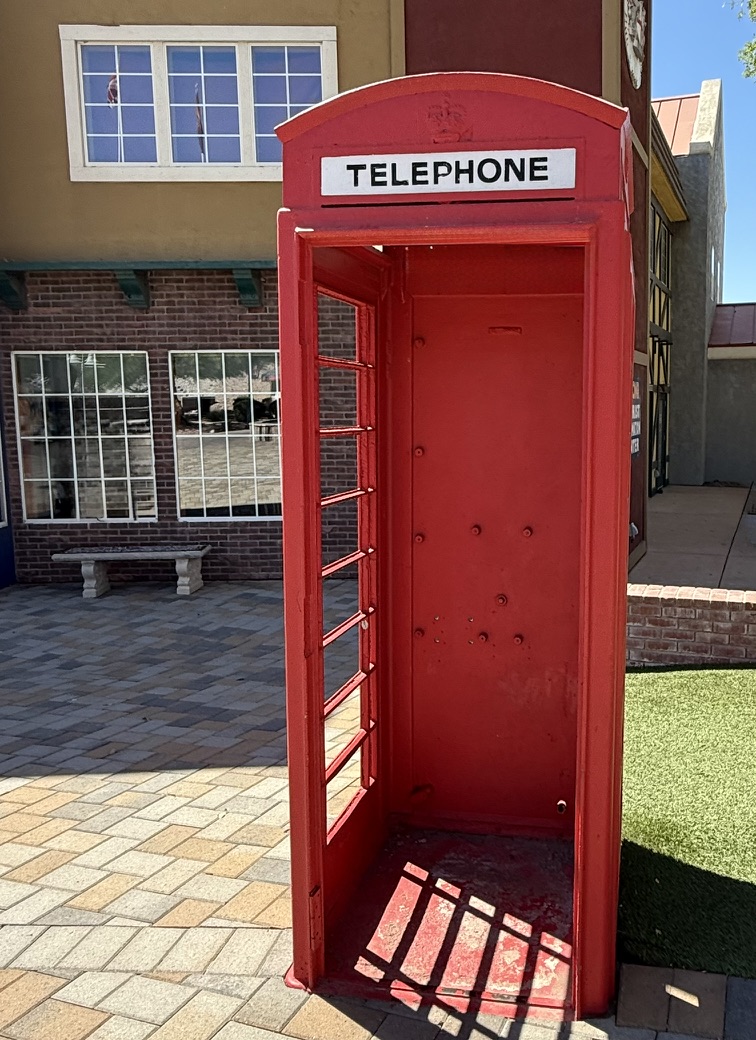
I went to check it out – and while the triple digit summer heat was a bit much for me, it was still a delight to say “hello” to this stalwart piece of history from my favorite city in the world! And right near the bridge, I found a few other relocated British items on display in a little area called the English Village:

Lake Havasu City looks full of inviting recreation opportunities like fishing, boating, and simply lounging either beside the lake or right in it as one group was doing – chairs, umbrellas and all! In a few weeks (and perhaps, fewer degrees…), their festival season begins in earnest with a packed calendar of musical and other events.
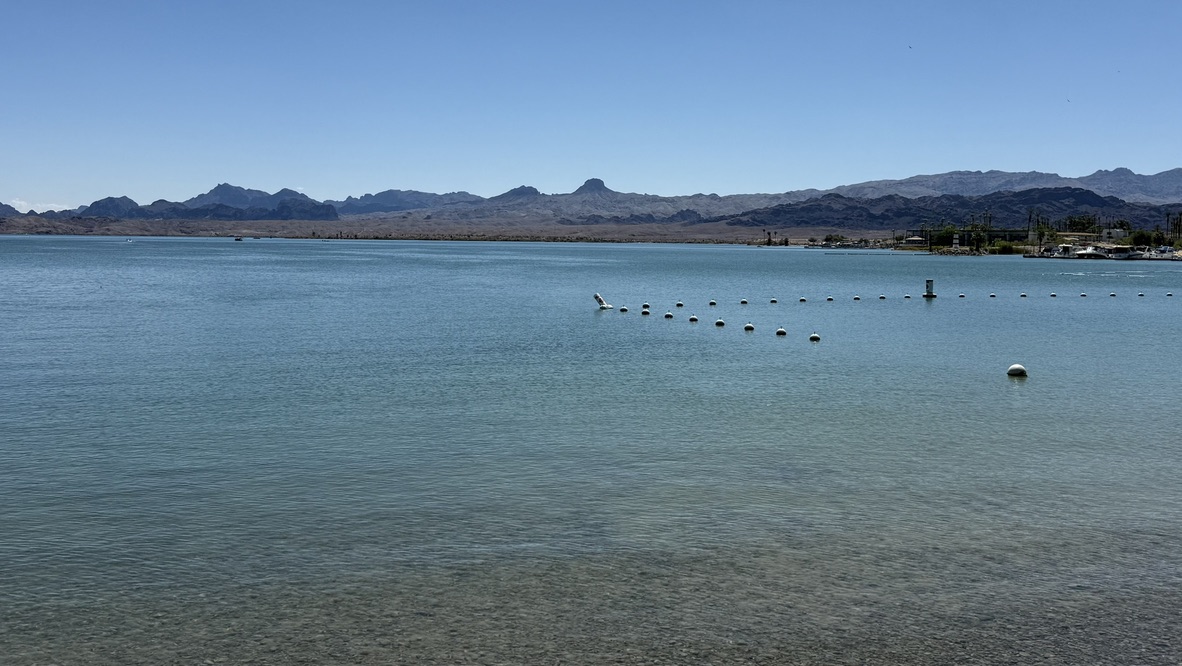
On my pleasant walk along the shoreline, I paused for a while beneath the bridge. And but for the non-brackish water, the punishing heat, and pretty much everything else, I’d have thought: “By Jove, it jolly well feels as if I’m in London!”
Yeah, no. But I don’t think conjuring the bridge’s former home was the aim. In the end, this was the grabbed-at chance for a landmark’s story not to end, but to be written completely anew! And since it’s the reason I went to visit this recreational oasis, I have to say – well played, Mr. McCulloch! Very well played!
Whether I’ve seen them or not, it pleases me to know that these ex situ sights are out there! (Ex situ’s being proper jargon – um, I think…) And I love that each of their unique stories was given the chance to continue!
Cheers!
 TESSEROLOGY
Fortunately the moved London Bridge looks very firm and is not falling down as in the nursery rhyme. It’s still hard to imagine having the idea let alone moving the bridge.
Ha! No, I don’t think this one’s made with wood or clay. And I agree that it was quite the marketing move!
I have a small story about that London Bridge…my mum wrote a letter to a woman’s magazine she read in the UK about how she used to walk over this bridge every day going to work. They liked it, published it, and so mum decided to send it to the man who bought the bridge (how she found this out I do not know….), and whoever read the letter sent her a book and nice letter as a thank you. I am so glad you have seen it!
That’s terrific! Glad she got a kind response from the bridge’s new owner – and it’s fun to think that I’ve walked over the very same stones as she did. Nice too that your mum shared her story once, and now you’re sharing it in turn! Thanks so much!
How nice that you got to see the former London bridge. I read years ago that that guy thought he was buying the Tower bridge but maybe that was just a rumour.
I read that too but also that they always denied it (Tower Bridge IS a bit flashier). I do wonder though – I mean, if I’d just bought the wrong bridge for a small fortune, I don’t think I’d want to admit it – even if I kept my receipt! 🥴 Thanks for reading!
Meant to say though that, flashy or no, it still meant a lot to see the bridge and to think about all it had been a part of!
Delightful overview, Amy! I confess: until now I’d assumed in situ was a philosophy term. Ironically, I’d removed it (in my mind) from its original (archaeological) setting.
Thanks so much! I’ll confess in turn that I knew the term had applications across a number of science-y disciplines – but not in philosophy! I found a definition and feel like I’ll have to think about it a while to really get it (maybe while I do my laundry which has been in situ for some time…) – it’s an intriguing philosophical concept! Thanks for introducing me to it, and for reading!
Beautiful view!
[…] Amy takes us to things that are out of situ over at Tesserology. […]
Thanks for the plug and for the fun read!
‘Ex situ’ and ‘in situ’ have been part of my vocabulary for 55 years – but in relation to conservation of biodiversity. ‘Ex situ’ relates to conservation in seed banks/genebanks (thus my work on potatoes and rice in the Americas and SE Asia), and ‘in situ’ to conservation in nature or in farmers’ fields (which my research group studied in the Philippines, Vietnam, and India).
Wow, I hadn’t realized how those terms apply to so many different fields (pun kinda intended)! My dad was a forest pathologist who focused on fungi – can’t help but be curious about your conservation efforts and whether that was on protecting seeds from disease and/or by better practices? I wonder too about the benefits to seeds’ being in- or ex-? (And please forgive me if these are silly thoughts – I majored in English…)
I loved visiting “The House of the Seven Gables” museum in Salem, MA – inspiration for the Nathaniel Hawthorne story — more than a few years back and was surprised to learn that they had also relocated Hawthorne’s birthplace home to the same “campus,” so they are side by side.
Oh wow – haven’t been to Salem but would love to check it out! If I’m honest, I appreciate something’s being preserved but, for me, it takes away a bit from the integrity of it when it’s no longer “in situ”. I mean, now we can’t know which direction that not-thrown-away shot of Hamilton’s actually went… 😉 Thanks, Jon – always a pleasure to get your take!
Beautiful photos! The first time I knew about the situ! Well shared
Thank you! Putting this post together was an education for me too!
Welcome 🤗
Welcome
what adventures!!
Indeed!