
Man, I’m so glad I got to take a trip back East last summer! I mean, beyond being all kinds of fun, it cleared up some questions I’d had about that side of the country!
Like after inhaling a Connecticut lobster roll, I now know what the fuss over those butter-laden bad boys is all about! I also wasn’t sure whether people would have accents like Katharine Hepburn’s (not so much – but my, Kate’s really was yar!). And I didn’t know why people had been urging me to go to Rhode Island to look at some cottages –
Until I saw one:
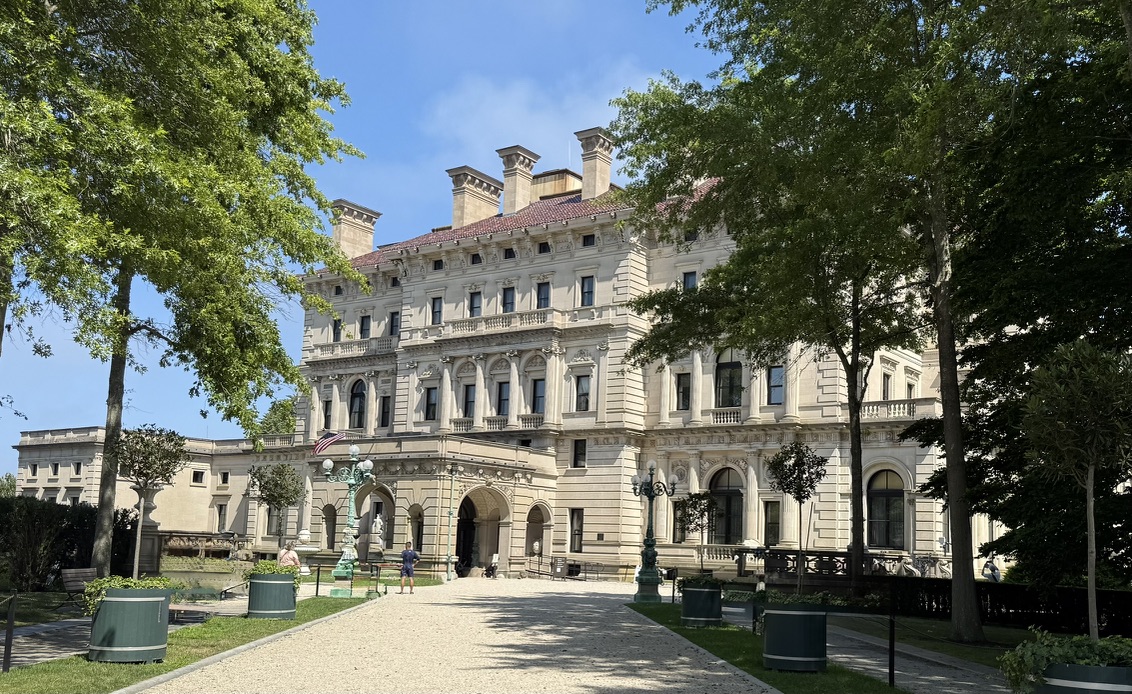
The Breakers is among a number of grand mansions which don’t so much dot the Newport coastline as put opulent exclamation points along it! It was once a summertime getaway (hence, the term “cottage”) for the Vanderbilt family – but now, common riffraff like myself can tour it for a dazzling dose of the Gilded Age! That’s the era between something like 1870 and 1900 when American society was careening into industrialization – when some rose to amazing heights of wealth, and many more were simply ground down. The term “Gilded Age” comes from the novel by Mark Twain and Charles Dudley Warner, and suggests that an appealing outer layer of gold may actually cover some dreadful societal flaws…
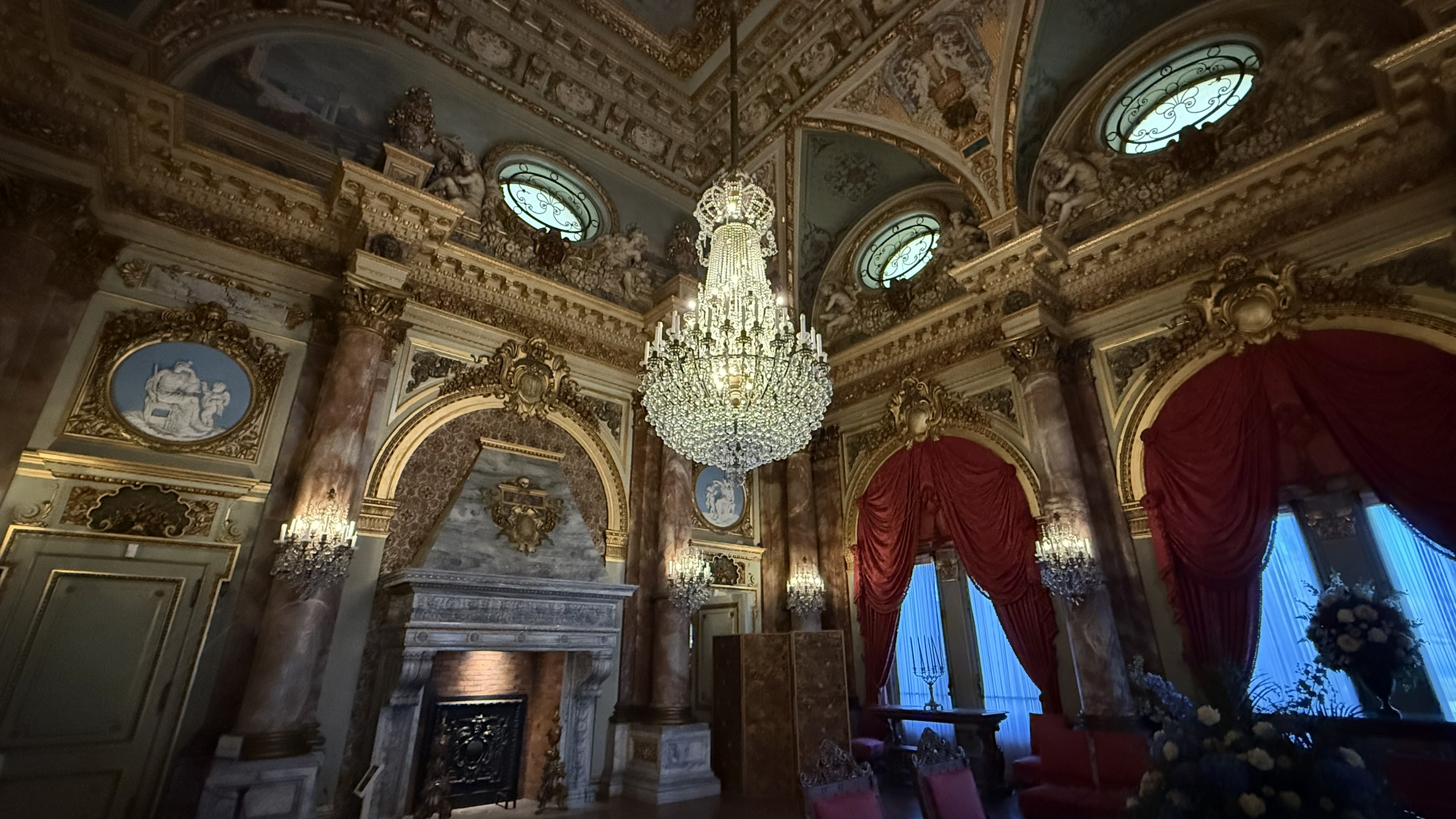
Back home in California, I got to wondering how this era of US history was represented in the West. Wanting to keep things down to my standard seven minutes’ worth of material for y’all, I narrowed my focus to a group whose Gilded Age prosperity arrived in these parts via the railroad – and I started by reading The Associates – Four Capitalists Who Created California:
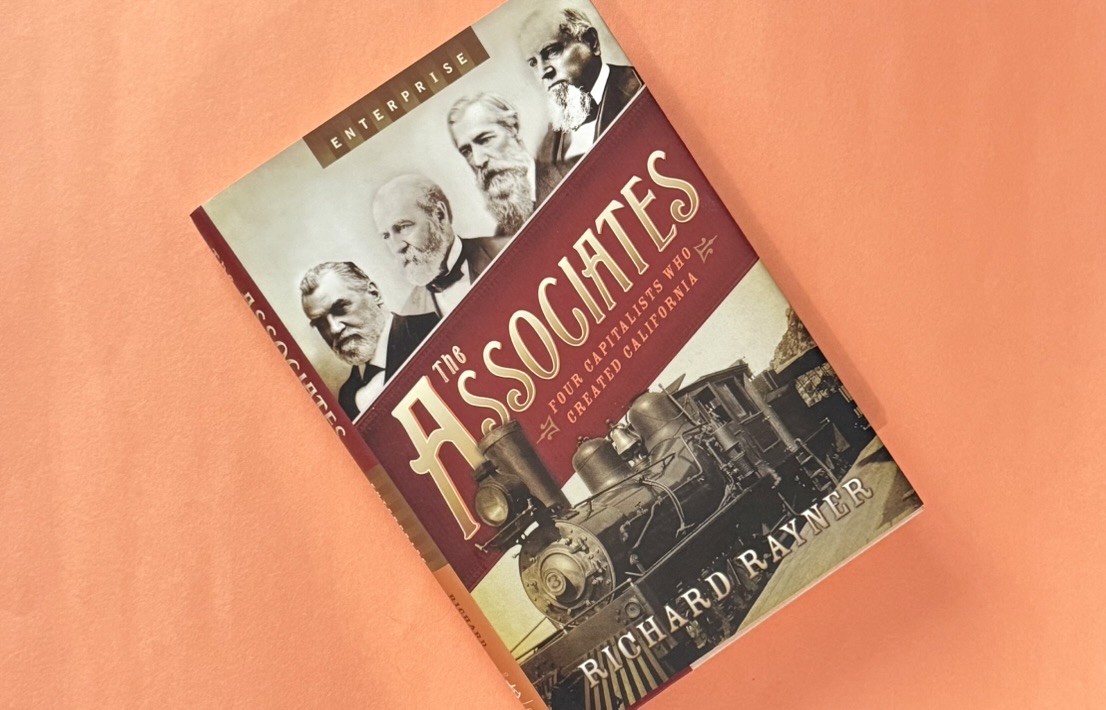
This exclusive gang was also known as the “Big Four”, made up of Charles Crocker, Mark Hopkins, Collis Huntington and Leland Stanford. And in the 1860’s, these guys built modest means into ridiculous riches by funding and controlling the Central Pacific Railroad – that’s the western section of the Transcontinental Railroad that connected the nation.
Given their status, I thought there might be a collection of Big Four “cottages” to see somewhere like the ones in Newport! Well, there was – only I was 120 years too late. These four men did buy or build coastal homes in what became the ritzy Nob Hill district of San Francisco, but sadly, all the mansions were destroyed as a result of The City’s devastating earthquake of 1906.
I did find other Associate-related footprints though that remain on the California landscape! Like during a meet-up with my dear niece in California’s capitol city of Sacramento, I got a look at the home of Edwin Crocker, legal counsel for the Central Pacific Railroad company in which his brother Charles served as Construction Superintendent.
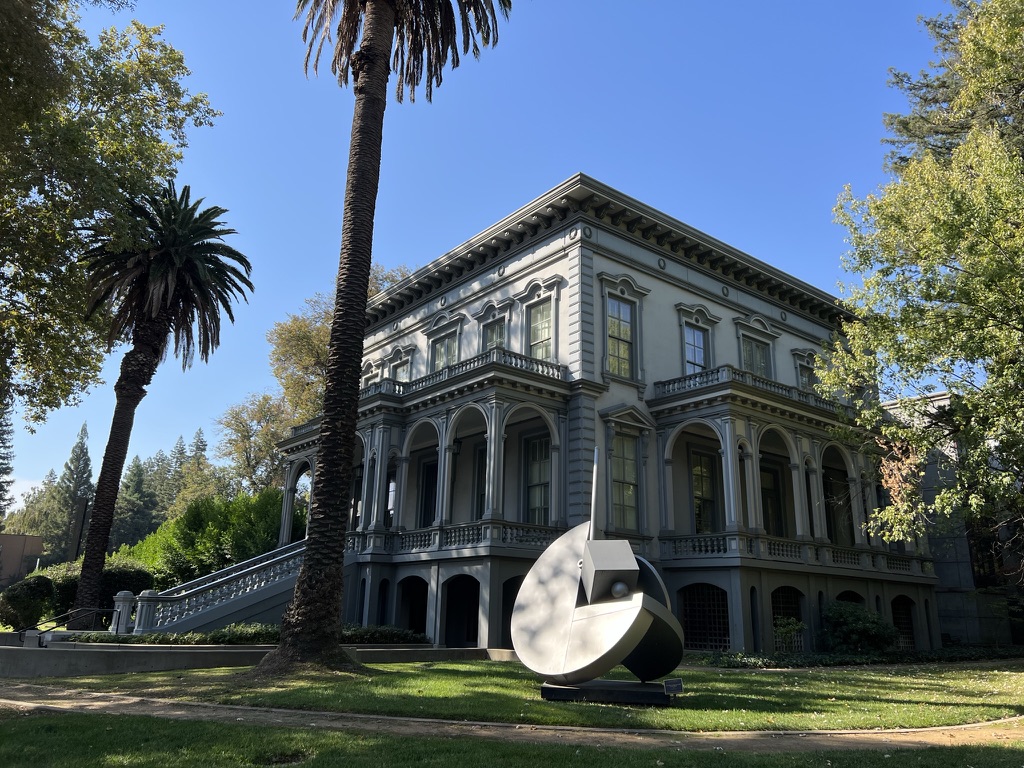
I’ll have to go back to the Capitol because I hadn’t realized I was only a matter of blocks from company President, Leland Stanford’s mansion (guess the SF one was only a spare – whew!) – it’s now Leland Stanford Mansion State Historic Park!
The San Francisco homes of company Treasurer, Mark Hopkins and Vice President (also, um, Washington lobbyist extraordinaire) Collis Huntington may have been lost as well – but the Hopkins/SF connection survives through the very posh Mark Hopkins Hotel that still sits on the spot where his home once stood. (Truth be told, it would exhibit a greater sense of decorum to use “reclines” rather than “sits”; also, “the promontory” rather than “the spot” might be more in keeping with…with…okay, I’m stopping.) And the Huntington name endures at a SoCal site right down the freeway from me! After Collis died in 1900, the family fortune stayed consolidated when widowed wife Arabella married Collis’s nephew Henry who was also in the railroad biz, and the couple set up housekeeping in San Marino, California:
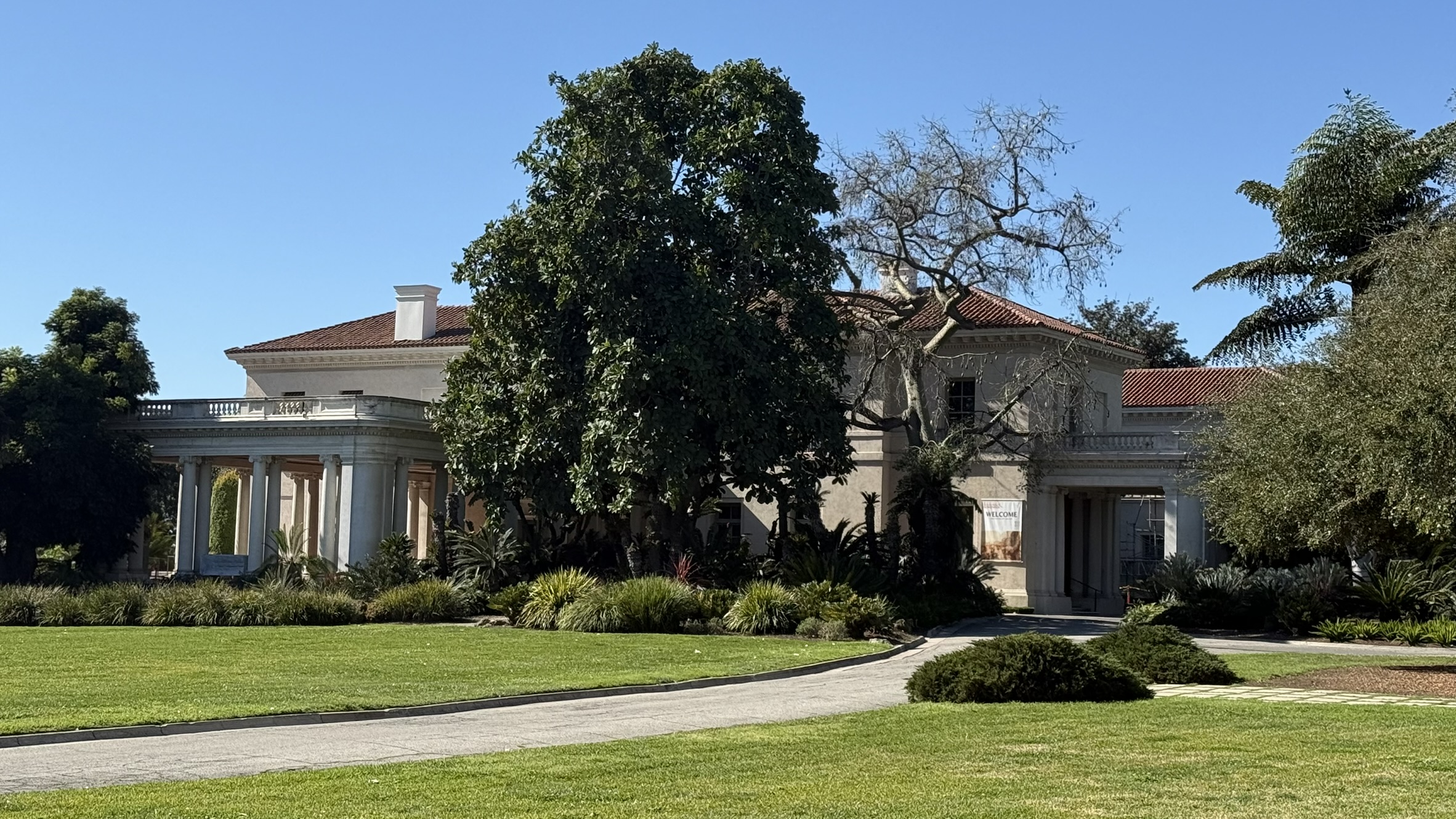
Henry and Arabella willed to the public their estate with its sprawling grounds and vast collection of books, art, and botanical wonders. The whole affair is now known simply as “The Huntington”, where researchers can study, and where all can visit and view anything from a Gutenberg Bible, to paintings by Gainsborough, to an exotic Corpse Flower that stinks to high heaven when it blooms! (Yeah, I’ll take a hard pass on that third one…)
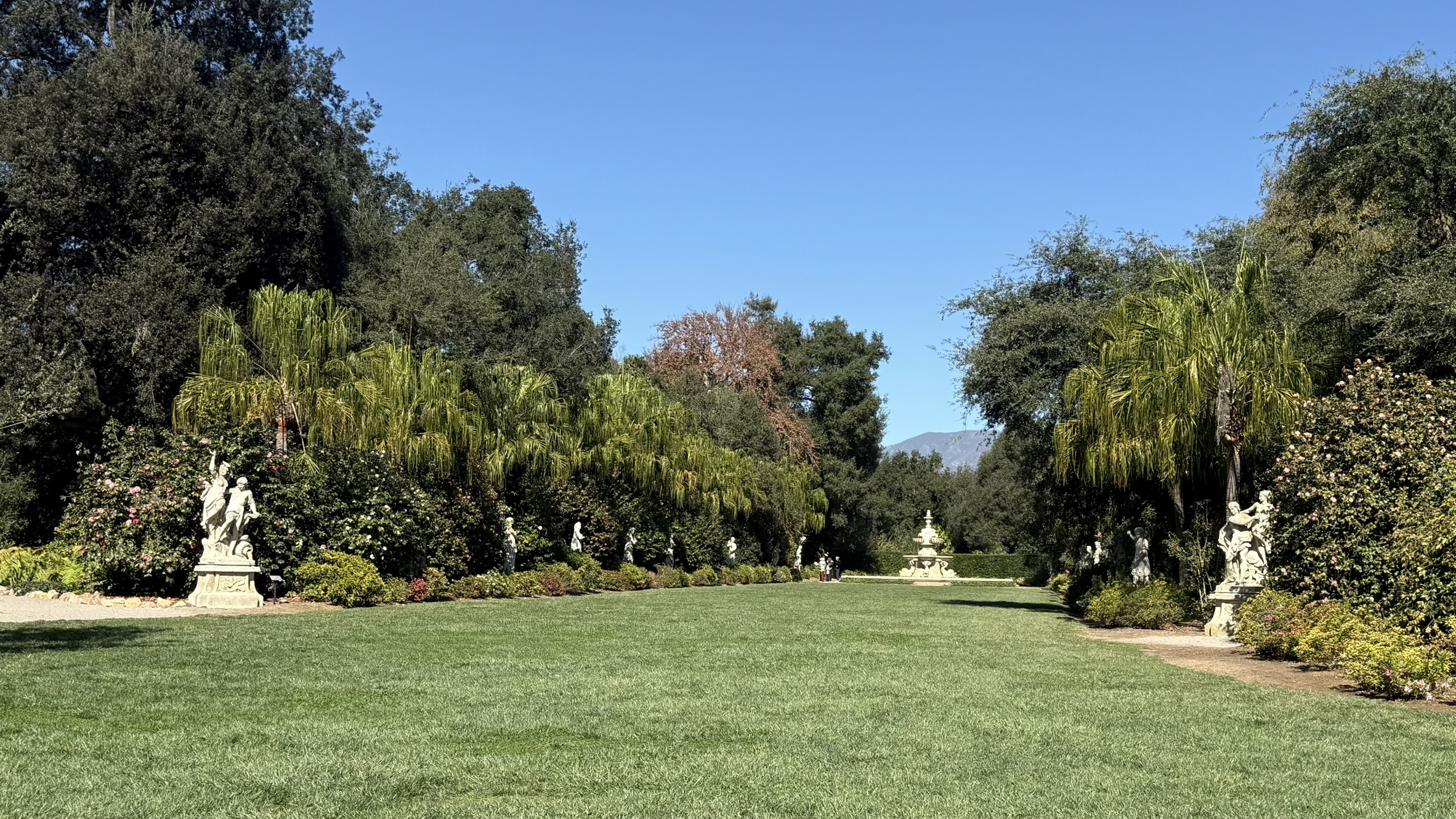
Now that I’ve learned a bit more about how the fortune that built this lovely legacy was acquired, it seems all the more fitting to me that the results are being enjoyed by the millions instead of by the few. Because the Vanderbilts and Associates were known by yet another nickname –
The “Robber Barons”.
The Associates earned a place on this list because of their Gilded Age style of doing business, as chronicled in Mr. Rayner’s book:
“To build influence and maintain power, they lied, bribed, and, when necessary, arranged for obstacles, both human and legal, to disappear.”
Ouch. Don’t know how much gilding it would have taken to cover that up for all time…
Even so, I can’t deny that I’m drawn to seeing how they tried. And it appears I’m not the only one – getting a peek into that elite world has proved popular enough for the HBO series The Gilded Age (detailing the fortunes of upperclass families in New York) to be heading into a fourth season! And I don’t mind following some of the footprints left here in the West by those Big Four titans to places (or at least the remnants of places) that went on to shine a kinder light:
While the site of the doomed Hopkins mansion did become land for a hotel, it was first left by his widow Mary to her second husband, who in turn donated it for what would become the San Francisco Art Institute for a time.
Leland Stanford’s Sacramento mansion was donated in 1900 to the Roman Catholic Diocese who made it a children’s home. These days, the mansion is used as an official government reception center to host visiting dignitaries. And Mr. Stanford invested heavily in a civic project during his own lifetime – he founded Stanford University in Palo Alto, California, which recently appeared in the fourth spot on a Forbes’ List of America’s Top Colleges! Since, however, the institution is an archrival of my own alma mater, UC Berkeley’s (Cal appears one spot below them), do please forgive me for having nothing further to say on the matter.
After the 1906 earthquake, the Crocker Family donated its mansion site to the Episcopal Diocese of California which built a new Grace Cathedral there to replace the one also lost to the quake – and it “graces” the spot today!
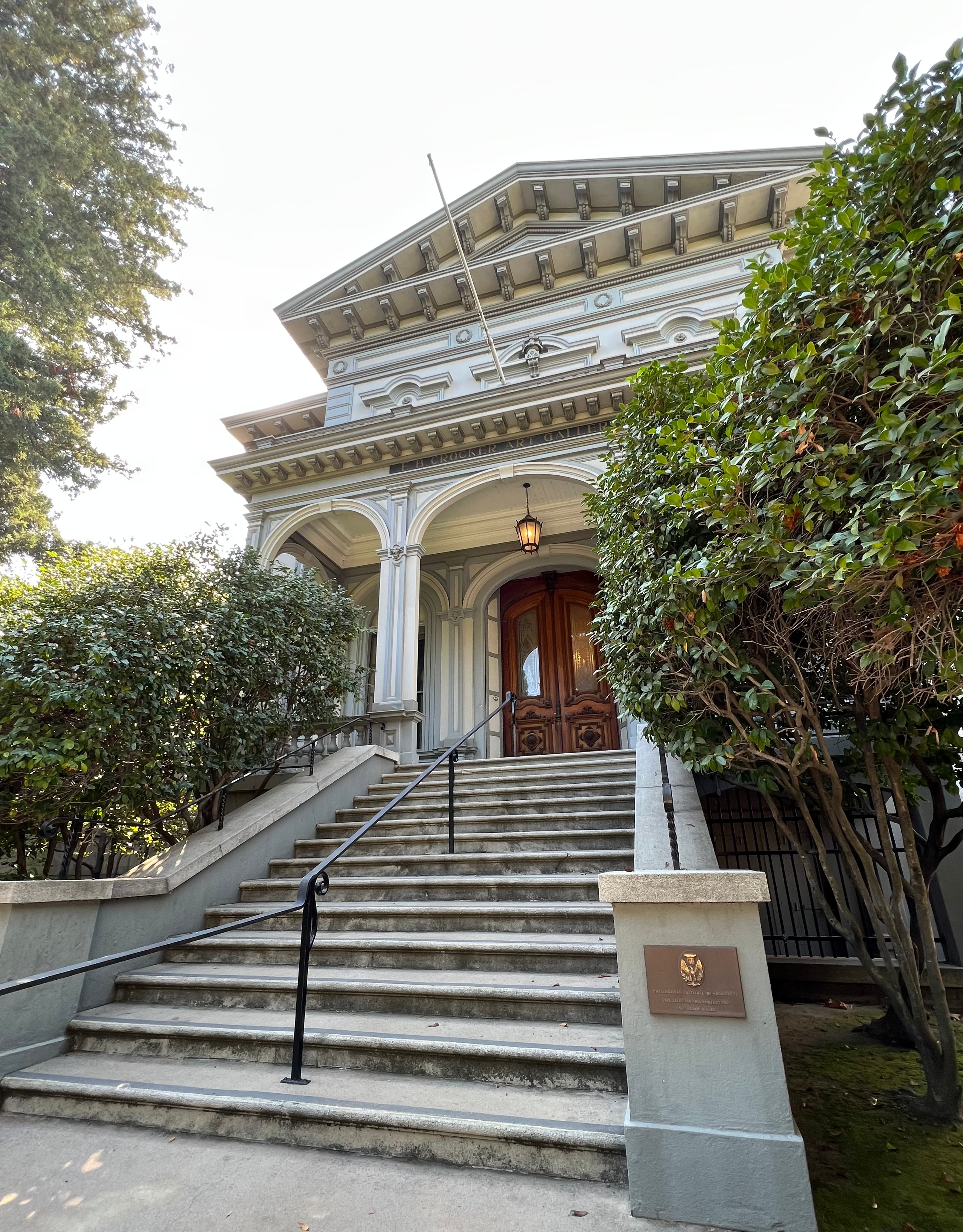
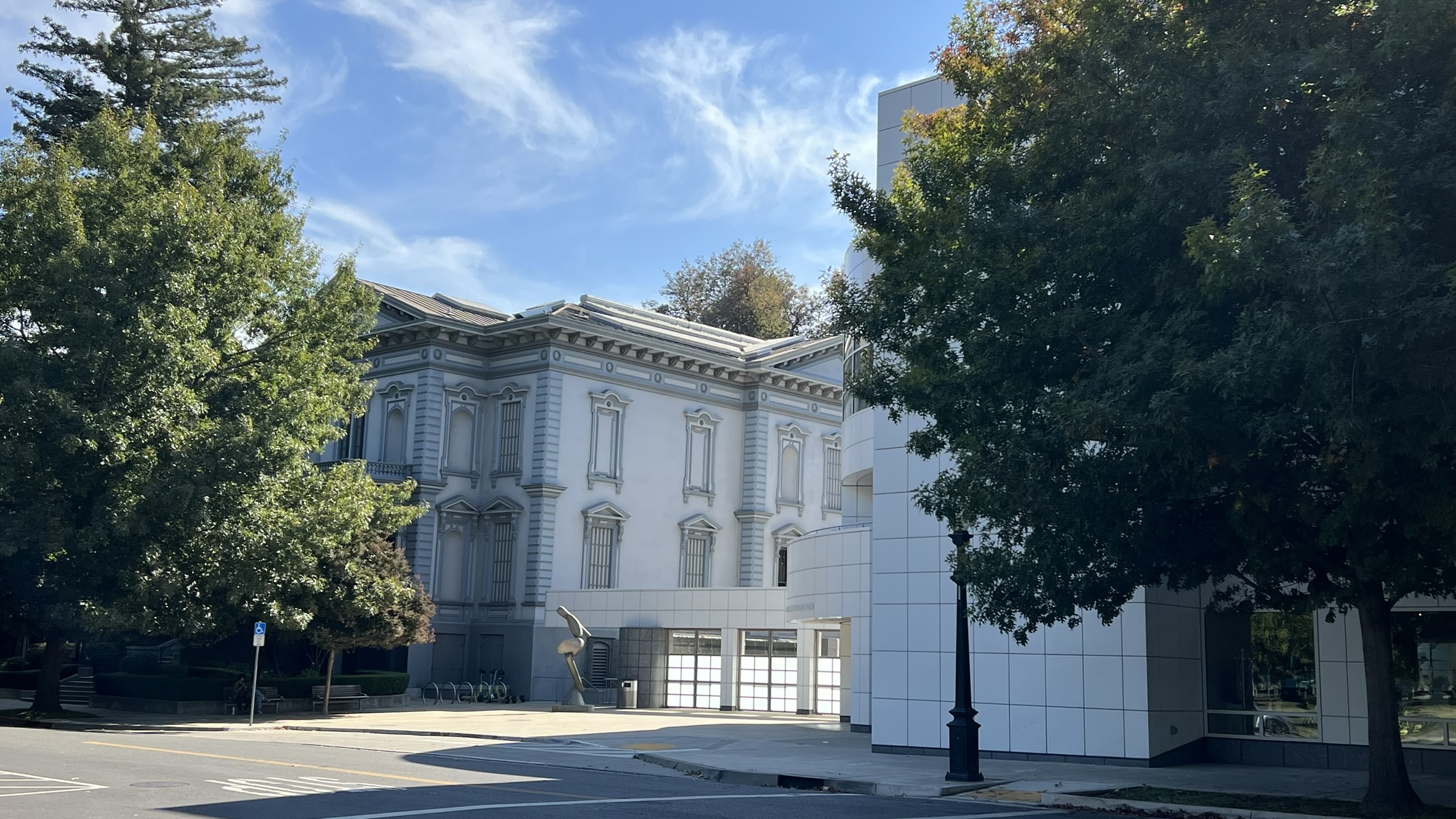
I’ve had the pleasure of visiting the complex of buildings in Sacramento that’s now known as the Crocker Art Museum! Among many international treasures, it houses California-related art from Native Americans and the Gold Rush era!
Finally, I love to visit the Huntington in San Marino where, through its continuing mission to educate and elevate, I always come away having learned and seen something new! Plus, I adore capping off these already wonderful experiences (“gilding the lily”, you might say!) by enjoying a proper tea by the rose garden!
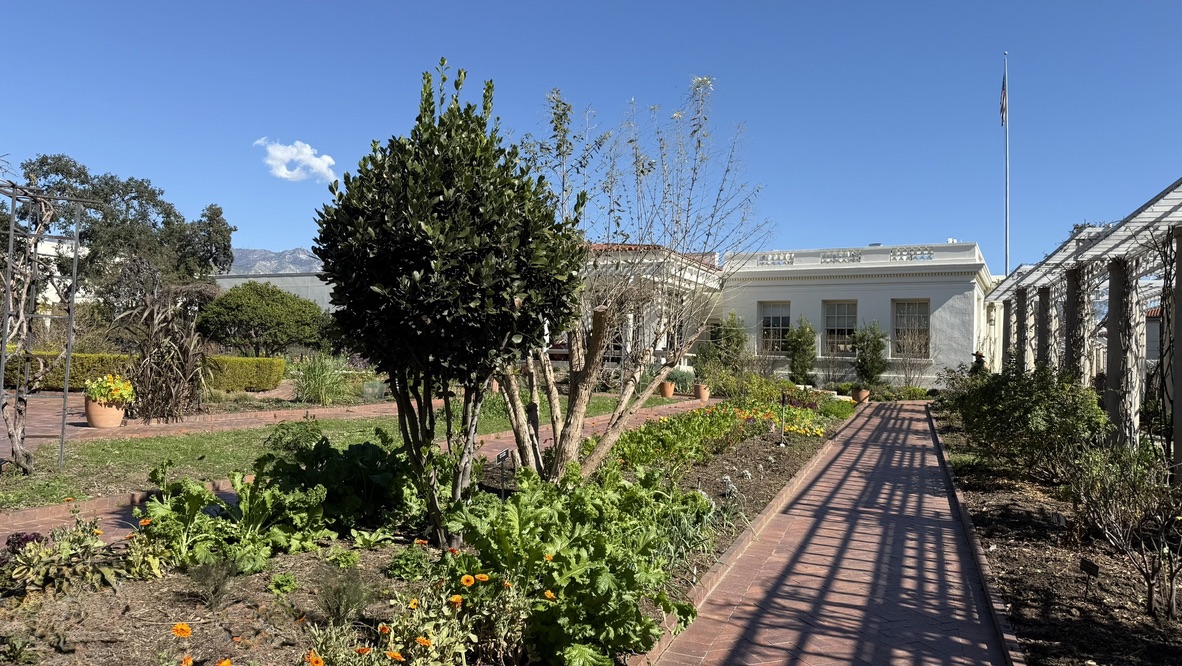
Nope. Can’t pretend I haven’t enjoyed spending a little time in the Gilded Age, wishing that one of these incredible estates was my very own for me to glide around with a regal air, to entertain in, then to recharge and repeat (but definitely not to clean)! I do think it’s worth knowing that what lies beneath some of that gilt may be less than savory – and I sure wish I could say it doesn’t happen like that anymore…
Ah, well. One’s hope must spring eternal.
In the meantime, offering to all a hearty – yet dignified – “cheers”! Oh and the butler will see you out. 😃
 TESSEROLOGY
A really interesting read – thanks for that.
Thank you so much! Shared lots of facts in the end…but it was an interesting topic to me!
If all goes well, in April we’ll once again be riding Amtrak’s California Zephyr from Chicago to Emeryville, across the Rockies and the Sierras. From Salt Lake City, it follows the alignment of the old Union Pacific Railroad – the one that made these 4 so spectacularly wealthy.
Sounds great – and quite historic! We’ve developed faster ways to get from A to B, but I sure think trains are a great way to stay connected to all the amazing places in between. Enjoy!
Thanks for your refreshing share. ☕️❤️❤️. They really do wonders for the mind.
Thank YOU!
With pleasure! Have an enjoyable week.
Cottages? Weekend getaways perhaps! 🙂
Yes, not at all what I’d call a “cottage”. But po-tay-tow/po-tah-tow, I’d sure get away to one!
No way are any of these splendid buildings ‘cottages’! But I loved seeing them all and reading about them. Thank you.
Thank you very much – and I agree! “Cottages” aren’t the kind of thing a person could get lost in. 😃
My Scottish mother-in-law’s maiden name was Huntington, I am pretty certain that branch of the family that stayed in Scotland did not do as well!
The San Francisco earthquake was a stark reminder that the creations of the wealthy cannot rise above nature.
Well Huntington’s a good surname to throw around in these parts! And yes – when Nature wants to assert itself, it doesn’t matter how rich you are… Thanks for reading!