
One of my favorite things about traveling is getting to make connections I never expected! I just had the pleasure of wandering into a historical connection between my favorite California coastal haunt and a small town about 400 miles away –
Their link was media tycoon William Randolph Hearst.
While I’d known about Hearst’s habit during overseas journeys of purchasing everything from small art pieces to entire buildings that caught his fancy, the fate of one such purchase was a total surprise to me!
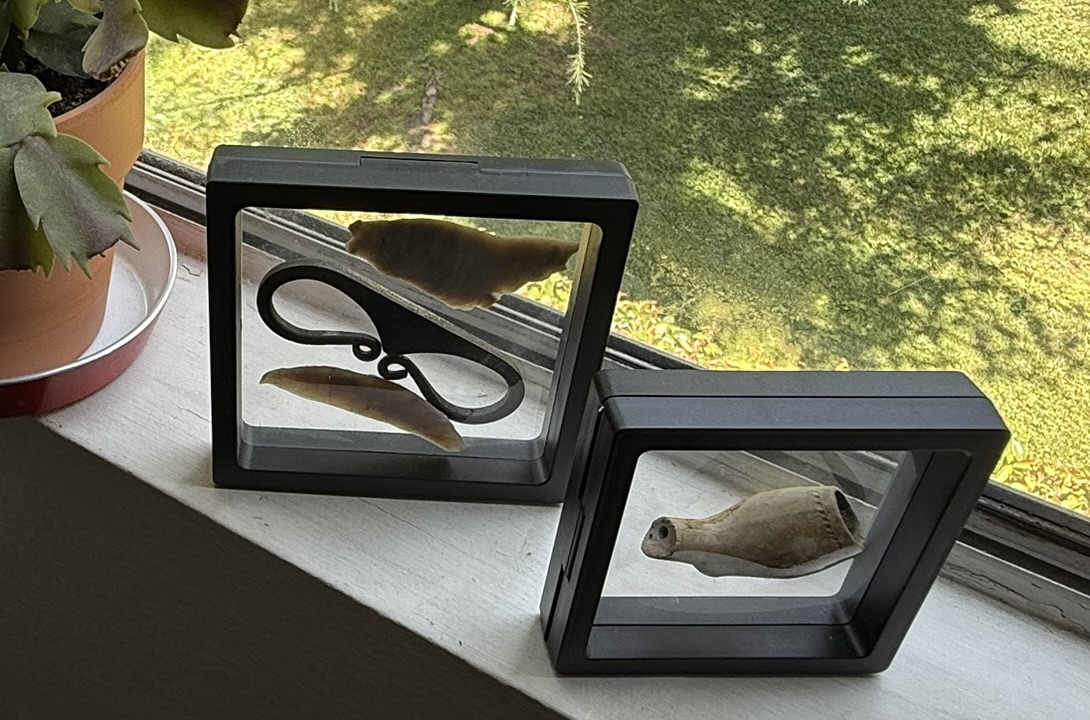
I’m fond of collecting travel remembrances, myself! I cherish two on my living room windowsill from last year’s big adventure – one a Viking-type fire striker with striking stones from Denmark, and the other a pipe bowl I found along the Thames in London which my mudlarking guide told me could date from the late 1600’s!
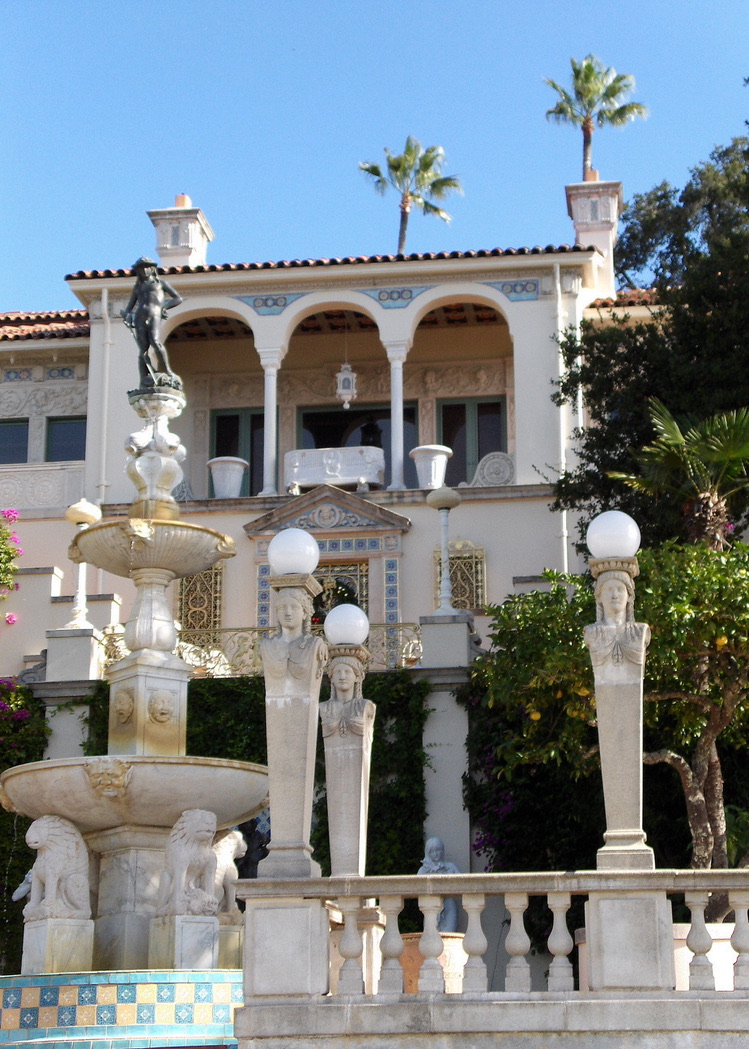
So Hearst and I share this trait! Although having been a tad bit wealthier, he indulged it on a much, much – no, seriously, much – grander scale. I’m reminded of this whenever I’m fortunate to get to retreat from big city life to the coastal town of Cambria where I wander the bluffs, gaze at the ocean and recharge the mental batteries. While making my now customary drive half an hour a bit farther north for lunch at Ragged Point, I always squint up the mountainside as I drive through San Simeon for a glimpse of old WR’s more opulent equivalent of my windowsill – La Cuesta Encantada – probably better known as Hearst Castle:
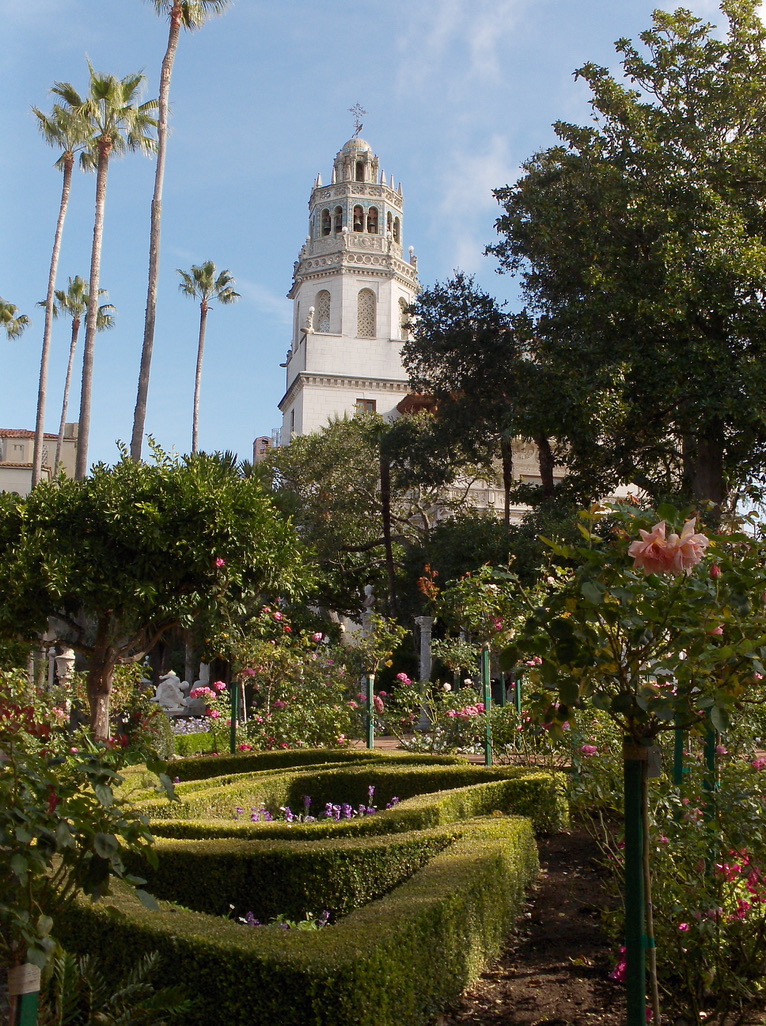
It’s now a California State Park and open to tour! But this magnificent architectural spread used to be Hearst’s own West Coast retreat which he began building in 1919 and continued to tinker with for several decades. Hearst furnished his hilltop passion project with travel souvenirs like sculptures and artwork, as well as features from buildings he admired. He even made off with whole structures if he liked their curb appeal! Items that were incorporated into the castle and grounds became the backdrop for parties with Hollywood stars of the day like Charlie Chaplin and Clark Gable, and for visits from the likes of Howard Hughes, George Bernard Shaw and Winston Churchill!
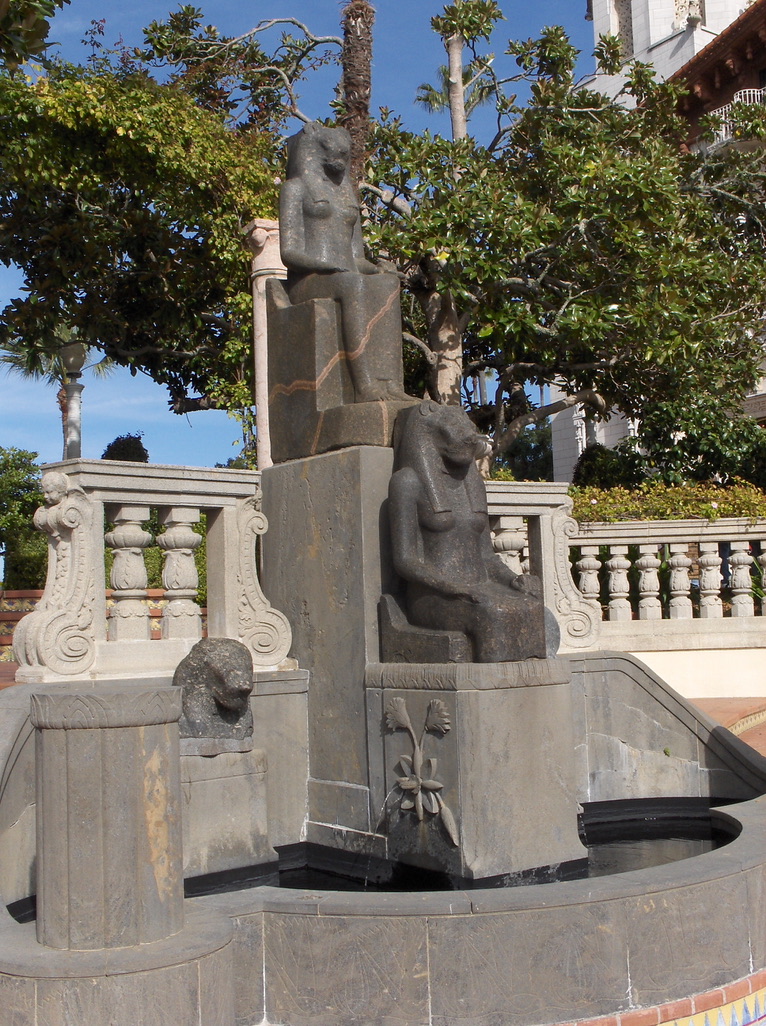
I’m proud to have my little window display – but I’ll sure acknowledge that in the antiquities department, Hearst Castle definitely has me beat! Sculptures like these depicting the Egyptian goddess Sekhmet date all the way back to the range of 1550 to 1070 BCE:
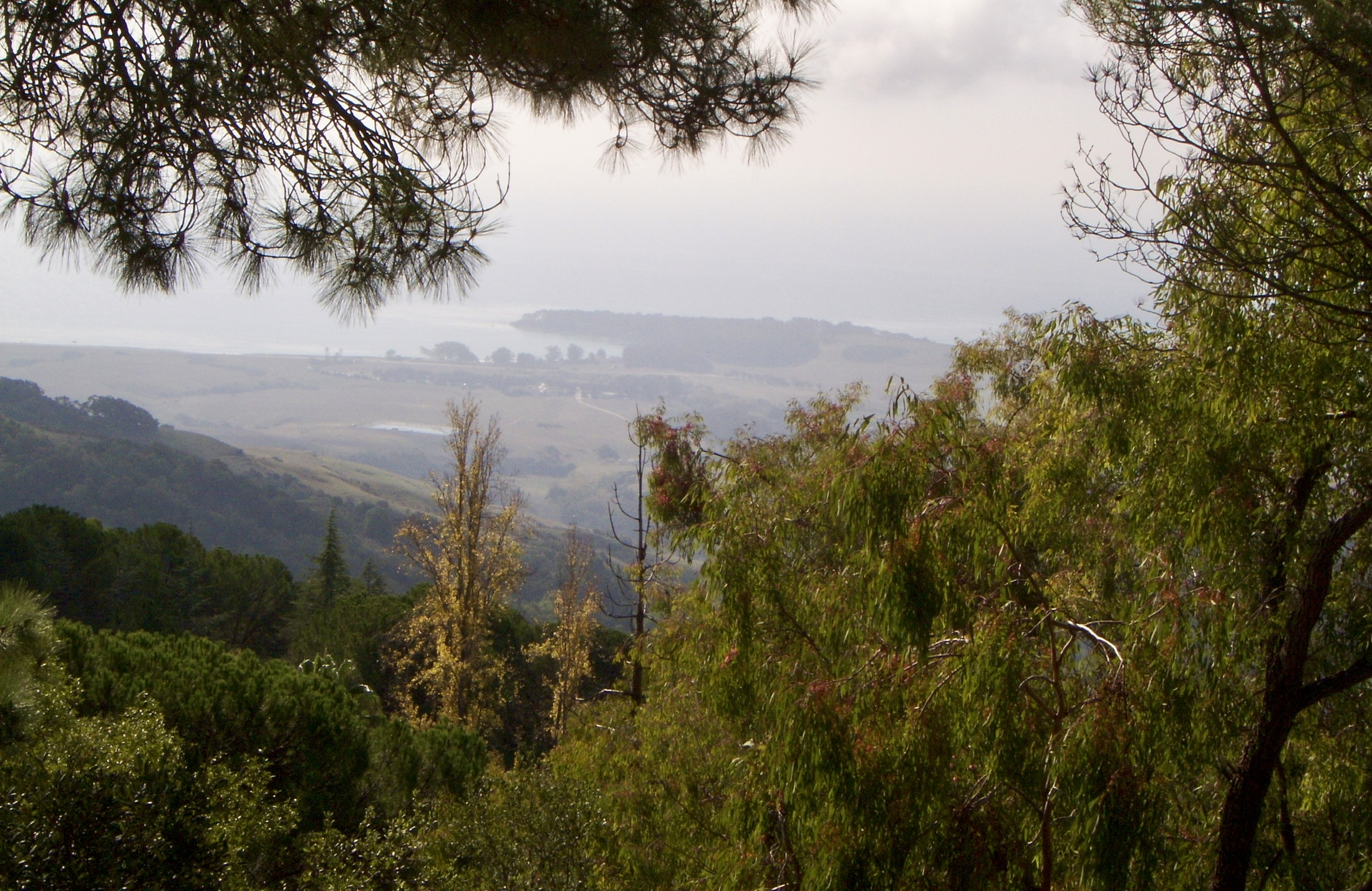
But I recently found out about one of Hearst’s foreign purchases that didn’t wind up overlooking the Pacific. Its journey from Spain stalled on the California coast for a time, but eventually would continue inland to the town of Vina (about 100 miles north of Sacramento) and culminate among rows of growing grapes –
It’s become part of the Abbey of Our Lady of New Clairvaux.
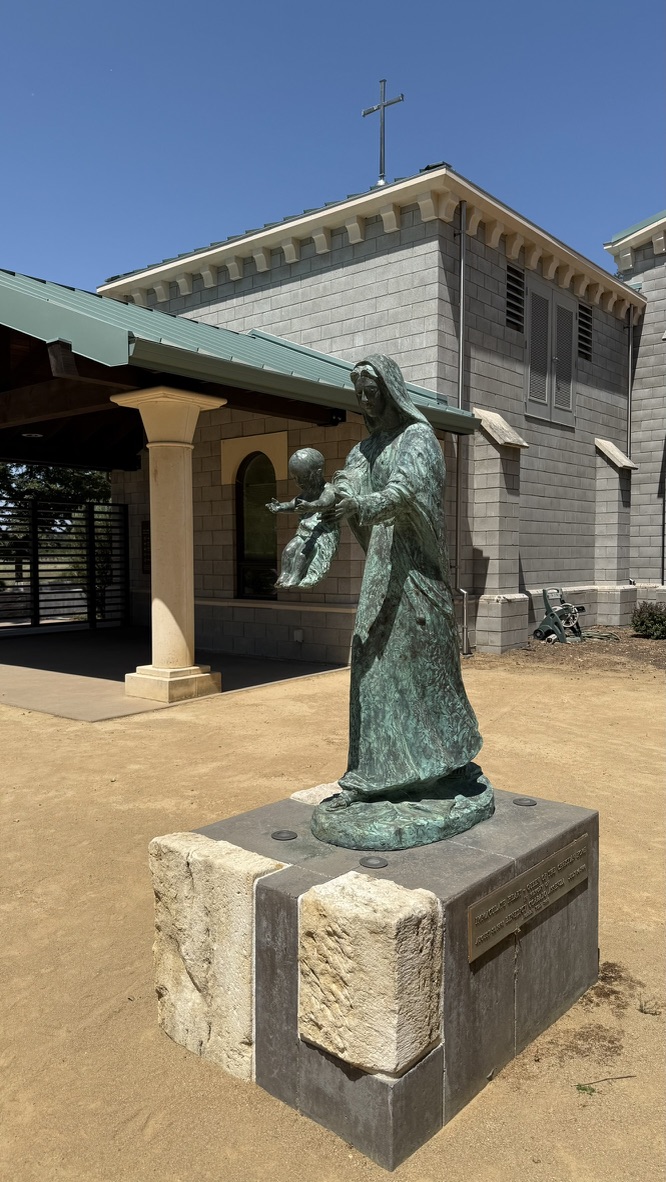
During a visit to my NoCal kin, I’d been happy to accept an invite (between two high school graduations and one 8th grade promotion!) to go wine tasting – and the experience turned out to be (in wine terms) much more complex, elegant and sweet than I could have imagined!
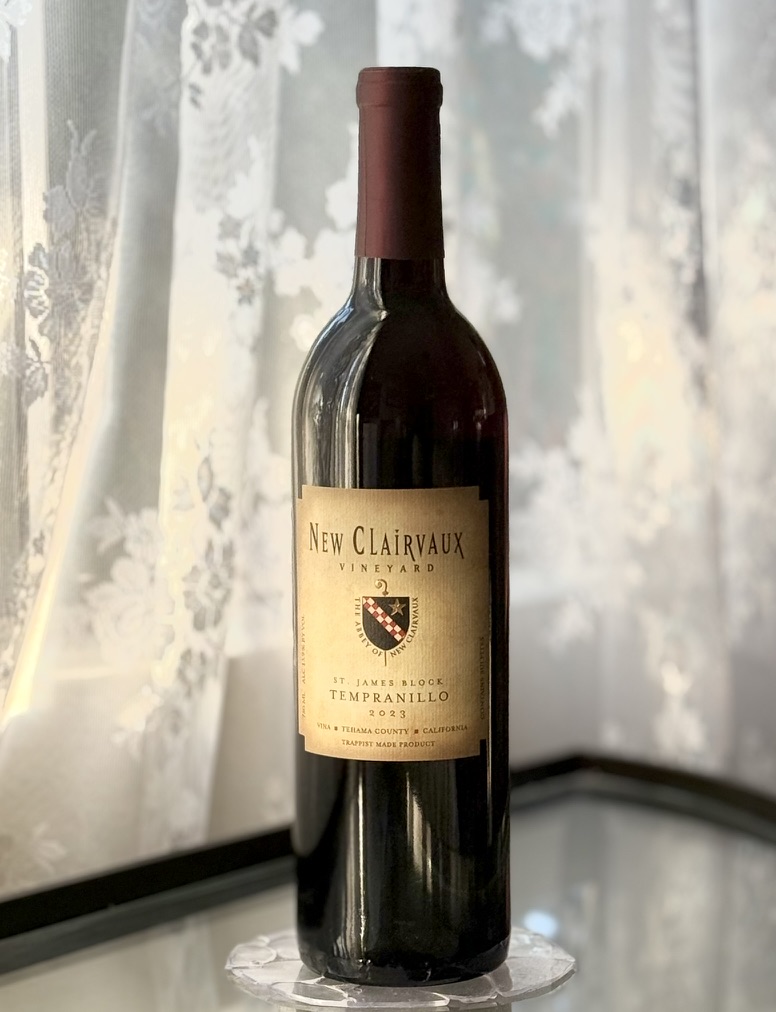
Our tasting was in Vina, which boasts a tradition of more than 150 years of winemaking that’s being continued by New Clairvaux Vineyard. (The name “Vina” comes from the Spanish word “viña”, meaning “vineyard”.) One of their estate blocks as well as the tasting room lies on fifteen acres shared with an order of Trappist Cistercian monks at the Abbey of Our Lady of New Clairvaux.
They’ll always be “the kids” to me, but members of the next generation of my family (and the next!) were all of age to enjoy a tasting in the spacious, brick Clairvaux tasting room, and we each went home with a different favored wine! We also took advantage of the opportunity to wander the grounds and take in displays with bits of historical info about the Abbey, its origin and its position in time.
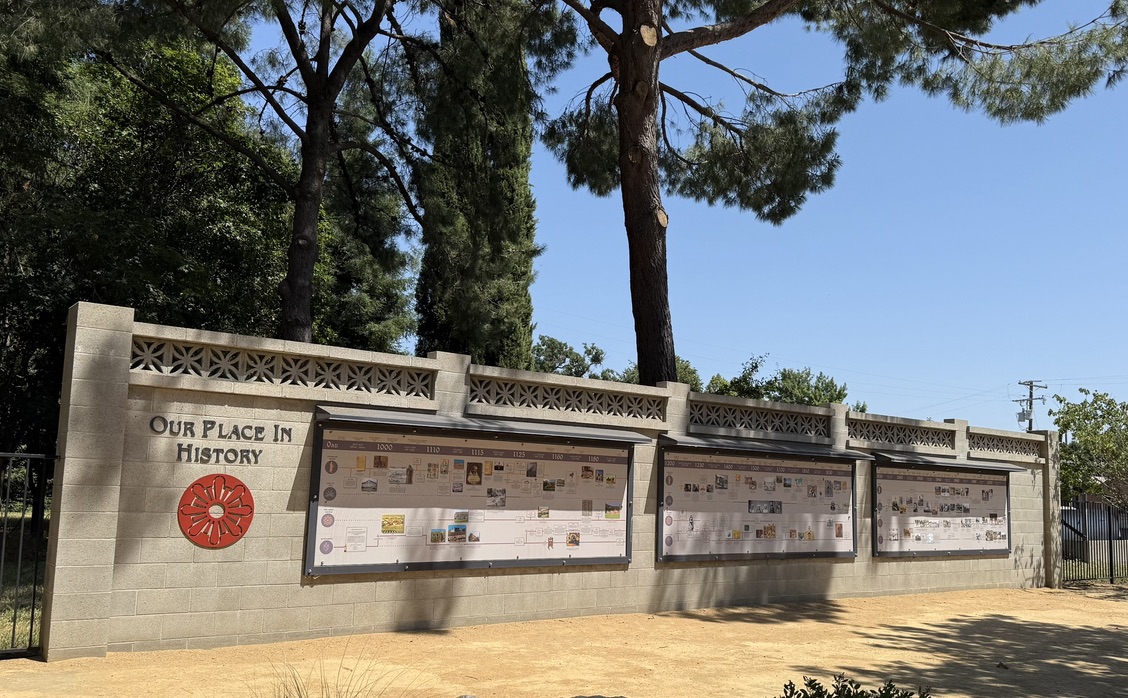
While soaking in the surrounding terroir (look at me breaking out another wine term!), I figured I’d be encountering some old buildings on the property. I was thinking “old” kind of in California terms though – like a building I’d consider old might date back to Gold Rush days or the era of the Spanish Missions. But I had no idea what I was in for when I made my respectful way over to the Abbey church!
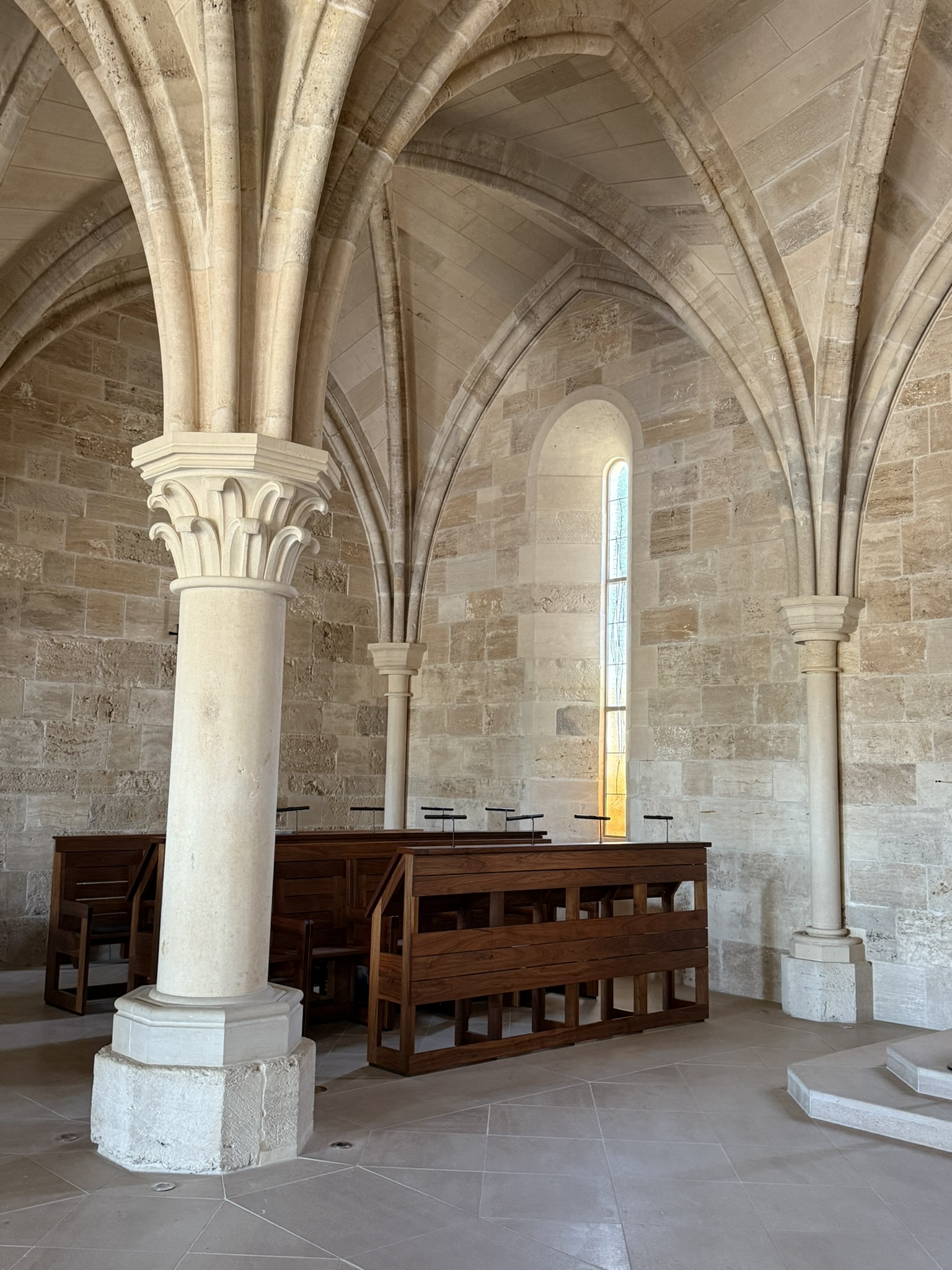
The church was completed here in 2018 which, yeah, doesn’t make it “old” even by California standards. But turns out some of its carved stones were once part of a 13th Century Spanish Cistercian monastery – Santa María de Óvila – which stood about 90 miles from Madrid! The monastery was among those closed in 1835 by government decree (spearheaded by a minister of finance guy named Juan Álvarez de Mendizábal).
But in 1931, guess who was touring The Continent, saw possibilities in the place and made an offer right then and there? Yup. WR Hearst bought sections of the monastery – something like eleven boatloads worth – and had them brought back to the US with a plan to use them at his Wyntoon property in Northern California (cuz ya can’t have too many exotically furnished estates!).
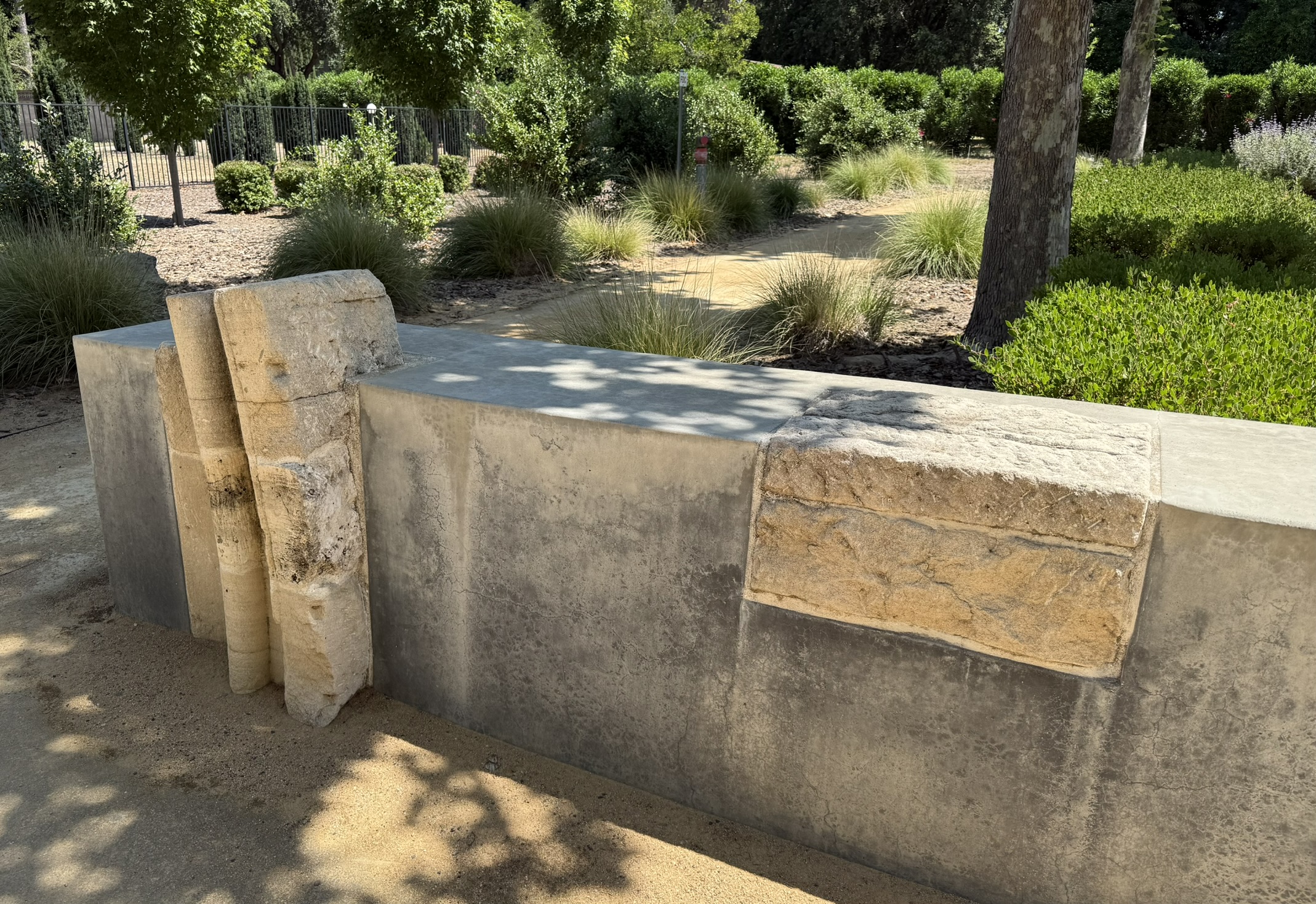
In the end, Hearst turned these stones over to the City of San Francisco, apparently with the idea that the monastery buildings would be reconstructed as a museum in The City’s Golden Gate Park. But the un-reassembled pieces remained there for decades and were succumbing to vandalism and decay until in 1994, a Father Thomas (abbot of New Clairvaux at the time) arranged to obtain them for the building of a new Chapter House in Vina. More than half of the stones were still sound enough to be used in the construction (in California, we have to consider earthquake stability and such…) while others were incorporated into features around the Abbey (like in the picture at the top).
Some stones have visible “mason marks” cut into them by the craftsmen whose hands worked them centuries ago:

So WR Hearst ended up leaving his own mark of a sort on these two California sites, each with decidedly different vibes – one decadent and one divine, you might say. I’ve thoroughly enjoyed touring his luxurious perch on the coast and imagining myself swimming in that pool or attending a lavish party! And now I’ve also appreciated the chance not just to savor a few lovely wines, but to sit in a church made of stones from Spain and savor some moments of contemplation and prayer.
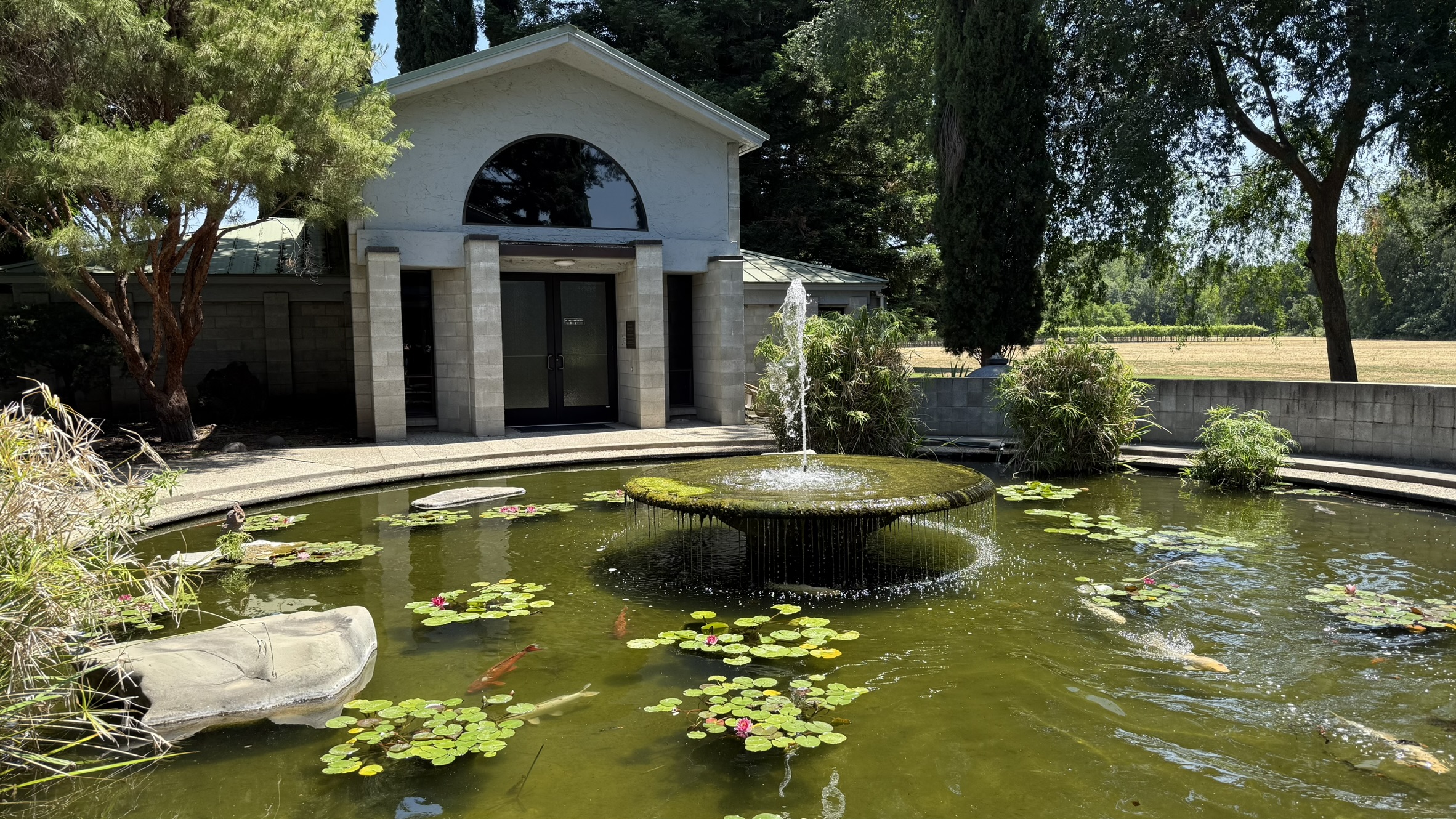
I hope the Santa María de Óvila masons and monks would take some comfort in knowing that these far-flung stones ultimately came to serve the kind of purpose for which they were made. On a warm and sunny day, accompanied by dear family and filled with a sense of peace as I walked among them, it felt like a fitting destiny to me!
Cheers!

 TESSEROLOGY
What a collector!
Right? Can you imagine being able to tour the world able to say “I’ll take that ancient statue and that entire building”? Quite a guy!
Absolutely!
A great article, Amy! Here I am a native Northern Californian and lover of California history, and I never knew the story of Hearst’s monastery in Vina! Thank you for your entertaining story!
Thank you! This was a surprise to me too and was sure fun to come across. Appreciate your reading!
Thank you for sharing interesting travel sites. I enjoyed this post!
Thanks for reading!
What a story, so the spanish monastery stones were used after all for a church. And his castle is magnificent!How did you come by Viking artifacts?I remember your post about mudlarking in London
Well, that’s just a copy of a Viking fire striker. It was a gift from a Danish friend which makes it special to me!
Ah, I miss the Calfornia coast! Your photos remind of the many getaways my wife took up the 101, and inland too.
Sounds nice – I do feel lucky to be able to spend time on the coast!
I really enjoyed this post. All those priceless pieces of art at Hearst Castle, and then the revelation of how a 13th century Spanish Cistercian abbey has contributed its ancient stones to the building of a modern abbey in California, thereby preserving the mediaeval remains and creating something new. Wonderful.
Thank you so much! Yes, it was a fun bit of history to stumble onto!
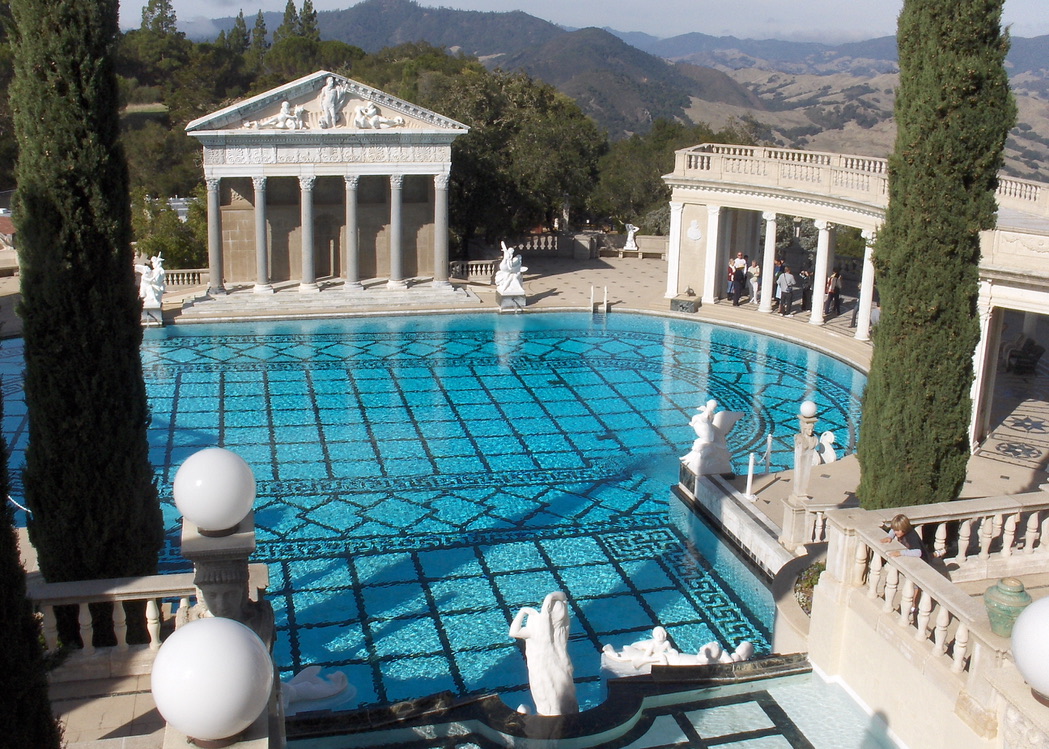
the neptune pool looks most inviting…
⬻𓂀✧ 🔺 ✬ღ☆ 🔺 ∞ ♡ ∞ 🔺 ☆ღ✬ 🔺 ✧𓂀⤖
Indeed! Would have loved to dive on in!
WHAT? like, so, what you’re saying is you literally actually DIDN’T??? Oh wait, stop, gotcha—there was a BIG sign there saying NO DIVING! right?
⬻𓂀✧ 🔺 ✬ღ☆ 🔺 ∞ ♡ ∞ 🔺 ☆ღ✬ 🔺 ✧𓂀⤖
Ha! Yes, it was tough but I obeyed the rules. Apparently, they’ve let staff swim in the pool – might just be worth applying for a job!
😉👍🌟✨💫
This is a great article Amy, very interesting
Thanks very much!
I recently attended a workshop on relics and reliquaries and during the keynote lecture, I realised what an amount of “holy” stuff from Europe ended up in private collections and museums in the US. I always supported repatriation of looted items and visiting the Royal Museum in London (and other museums with an imperial past) makes me deeply uncomfortable. I never, however, considered that there’s plenty that should be repatriated to European religious communities. I’m not a religious person and my Calvinist family background makes me suspicious if relics etc, but I have to admit that I thought that there should be a discussion on whether or not stuff should be returned. There are probably plenty reasons why they shouldn’t though. Conservation is expensive, of course. And yet…?
I appreciate your bringing this up! I decided not to address the issue of returning relics here (out of a combination of brevity and cowardice, I suppose…) but it was sure on my mind when I wrote the piece. (I did use phrases like Hearst’s having “made off with” European relics to suggest that I don’t necessarily approve.) I pretty much thought of the fate of the Santa Maria de Ovila stones as being a done deal at this point, but I’m sure there are countless other relics for which the returning could be inexpensive and practical. It would be a complicated and delicate case-by-case conversation to have – but a fair one, I think. Thanks again for the comment!
And of course, many relics were brought to the US and other places by people from certain communities beginning a new life or by missionaries etc. It’s more the things that were accumulated by rich people fancying a private medieval collection etc. As I said, I never considered it until recently. And I’d argue that we should return all the items first that made their way to Europe and the States due to imperialism.
[…] I can’t help mentioning how my college professor almost sounded regretful about the technological tools available in modern archaeology. He seemed to have held onto the romantic idea that if one found an ancient golden goblet in situ, it should be dug up straight away and brushed off with a sleeve, then filled with wine and passed amongst the crew for a sip – and then the analysis would begin! Back in more freewheeling dig days, whole structures (let alone goblets) might be spirited away from their in situ sites by an ardent archaeologist (or by a rich dude, as I recount in The Bit About Transplanted Treasures). […]